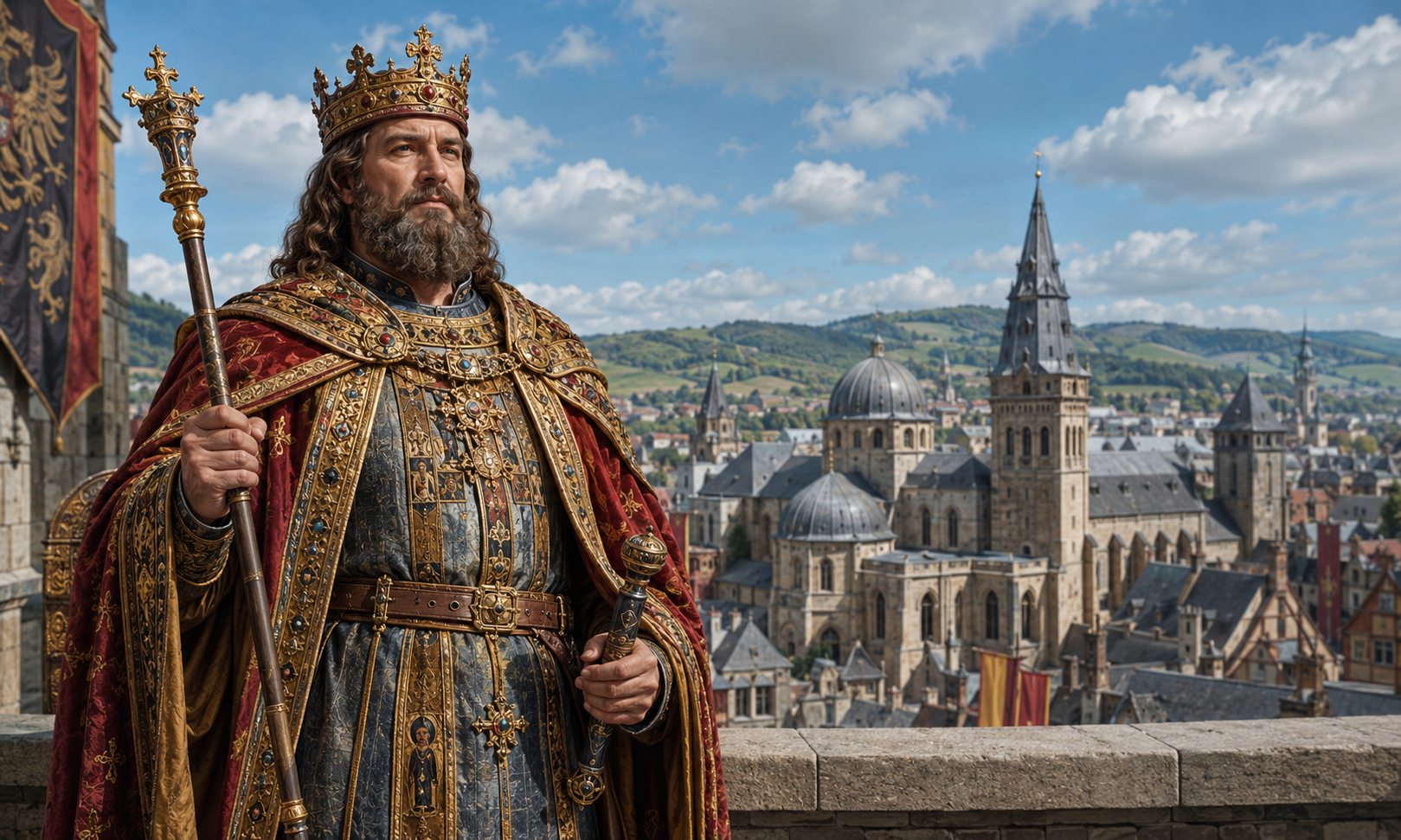
Charlemagne
Charlemagne’s path runs from the fragile Merovingian legacy to a renewed vision of a Christian empire in the West. Shifting frontiers and sacral alliances, protracted wars and patient reforms weave together: papal protection and the fall of the Lombard kingdom, the forced conversion of the Saxons later channeled into law, the clash with Avars and Danes, the testing ground in Spain. Alongside the sword stood the pen: capitularies regulating clergy and officials, schools and scriptoria fueling the Carolingian Renaissance, a reliable coinage binding economy and power. Political life centered in Aachen, with the Palatine Chapel as a concrete symbol of authority that aspired to be Roman and Christian, while missi dominici, councils, and regional laws tried to translate a universal project into daily governance. The imperial coronation on Christmas Day 800 did not end the story; it propelled it forward, through Byzantine recognition, succession planning, and the final handover to Louis the Pious. In this sequence, every turn—military, diplomatic, legal, or cultural—helped shape a political and religious Europe that, despite contradictions and violence, sought a shared order.