GeoHistory Journey
Ancient China: the Early Dynasties
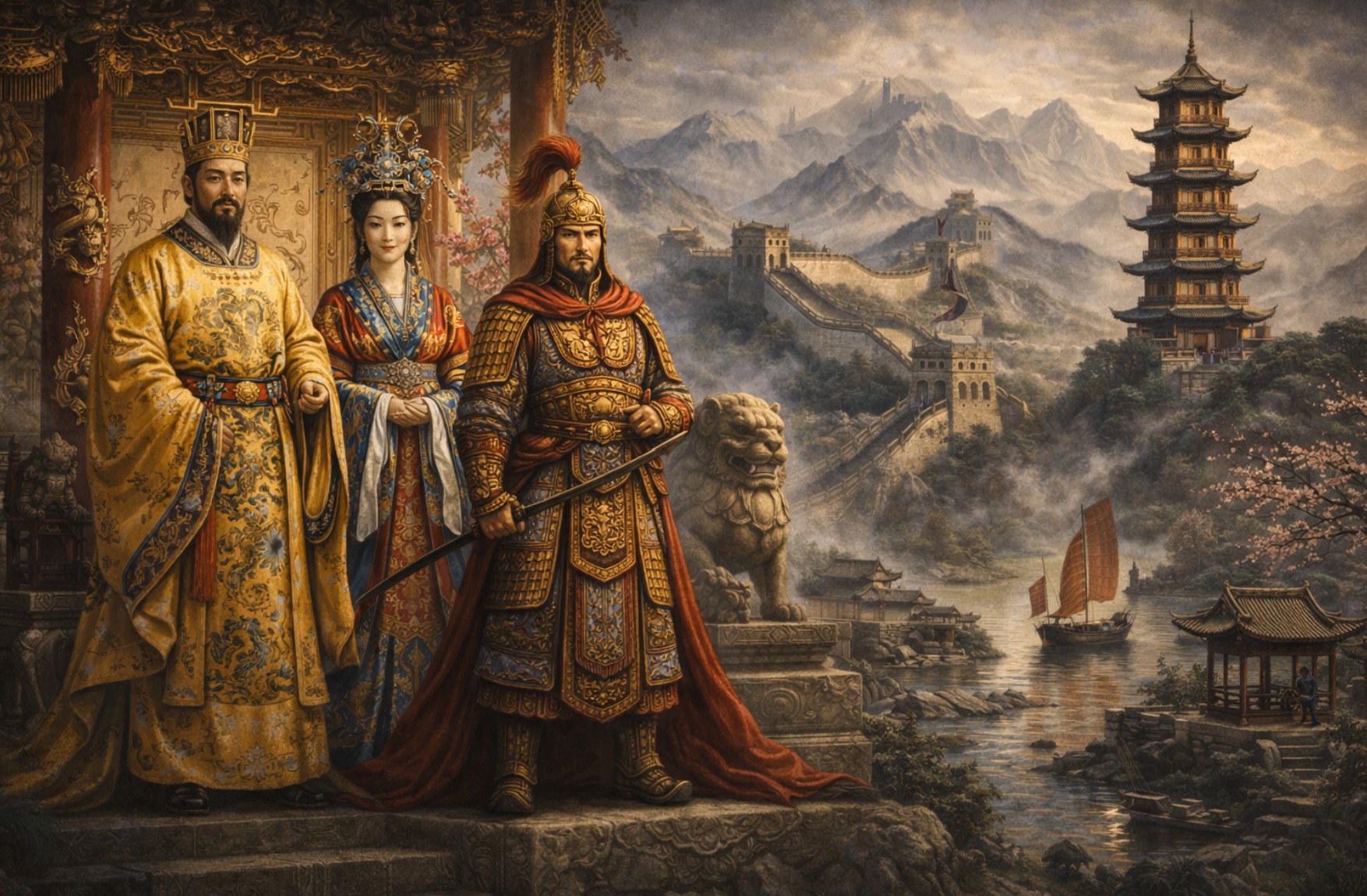
This journey traces the rise of civilization across the central-northern China heartlands—from the Yellow River basin to Sichuan and the lower Yangzi—between 2300 and 208 BC. Longshan communities, the Erlitou elites (often linked to traditions later called Xia), the Shang and Zhou kingdoms, Hegemonic states like Qi and Chu, the rivals Wu and Yue, and finally Qin dominate the stage. Political centralization, metal and jade trade networks, and an intense ancestor cult shape authority and social order. Breakthroughs include piece-mold bronze casting, the birth of writing on oracle bones, administrative and metrological standards, and Legalist reforms that made imperial governance workable. Metal and jade exchange, hegemonic diplomacy, and southern outposts such as Panlongcheng reveal a connected world. Wars punctuate the narrative: Muye topples the Shang, the disaster on the Han River halts Zhou expansion, the Quanrong invasion forces an eastern shift, and Changping paves the way to unification. The Duke of Zhou’s regency articulates the Mandate of Heaven, redefining the bond between virtue and dynastic fate. Qin’s empire, with sweeping standardizations and the mausoleum guarded by the Terracotta Army, bequeaths a legacy of statecraft and monumental memory.
This Journey requires a free account to open the interactive experience.