GeoHistory Journey
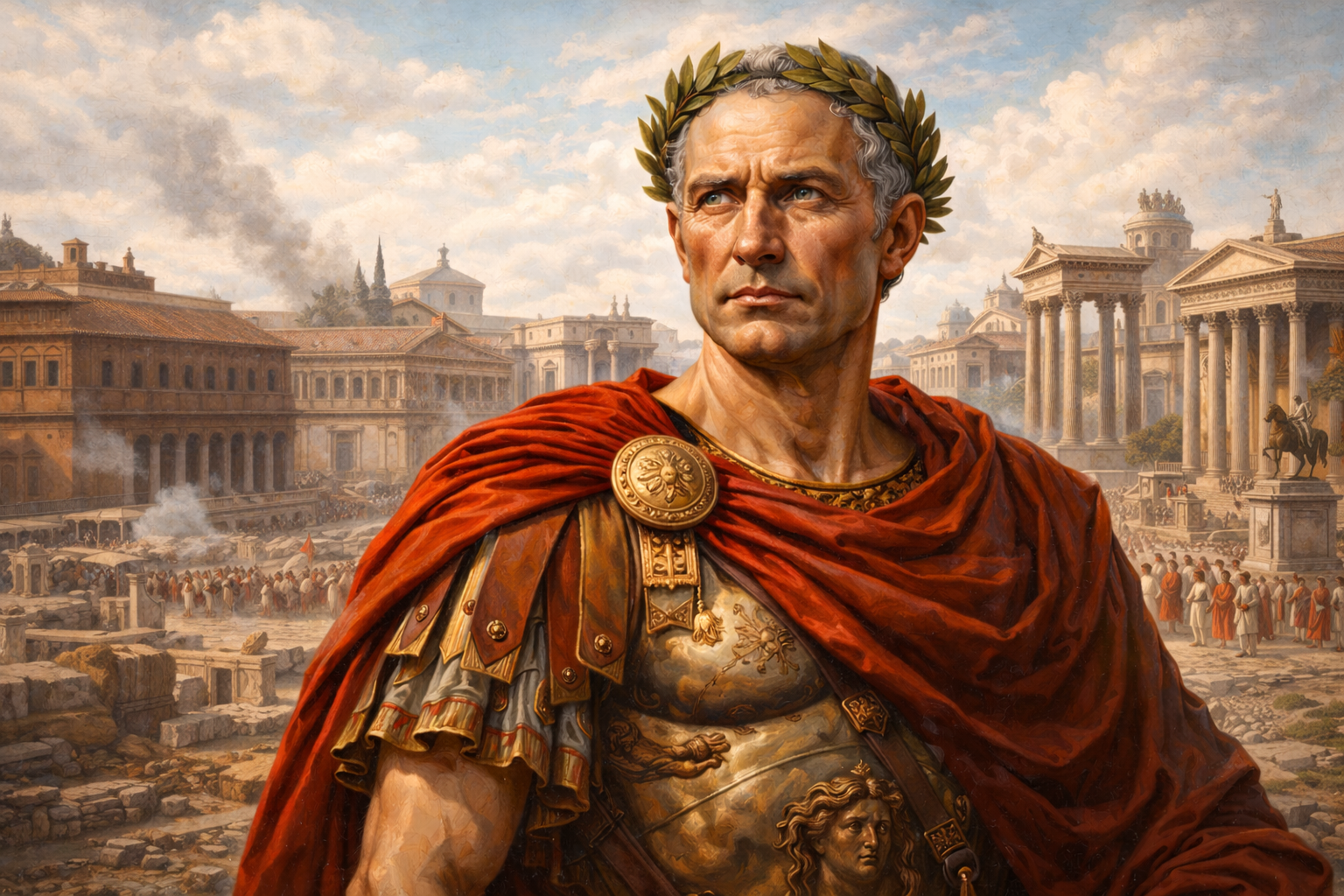
Julius Caesar
Between 100 and 27 BC, Rome endures a century of crisis and transformation that shifts the state from a Republic to the Augustan Principate. In the early phase, across Italy and the western Mediterranean, Caesar’s rise intersects with struggles between optimates and populares. From the 80s BC, religious and political offices integrate him into Rome’s elite and patronage networks. From 69 BC, Spain and then Gaul become laboratories for his military career and for building popular support. Between 60 and 56 BC, the pact with Pompey and Crassus consolidates an extra-institutional power bloc. From 58 BC, the Gallic campaigns push Rome to the Rhine and the Channel but also provoke local resistance and internal rivalries. In 55–54 BC, the Rhine crossings and the expeditions to Britain mark an unprecedented projection into northern Europe. Crisis bursts in 49 BC with the crossing of the Rubicon and civil war in Italy, Spain, Greece, and Egypt. From 48 to 45 BC, Pharsalus, Alexandria, Zela, Thapsus, and Munda destroy Pompeian opposition. In Rome, between 46 and 44 BC, reforms—from the Julian calendar to institutional reorganization—display a growing personal rule. On March 15, 44 BC, Caesar’s murder opens a new phase of violence and consensus-building. In 43 BC, the Second Triumvirate emerges, re-legitimizing exception through compacts and proscriptions. The eastern Mediterranean becomes decisive: Actium, in 31 BC, breaks the final resistance. In 27 BC, Augustus completes the formal transition: the Republic stabilizes as a Principate, founding a new grammar of imperial power.
This Journey requires a free account to open the interactive experience.