GeoHistory Journey
The Inca
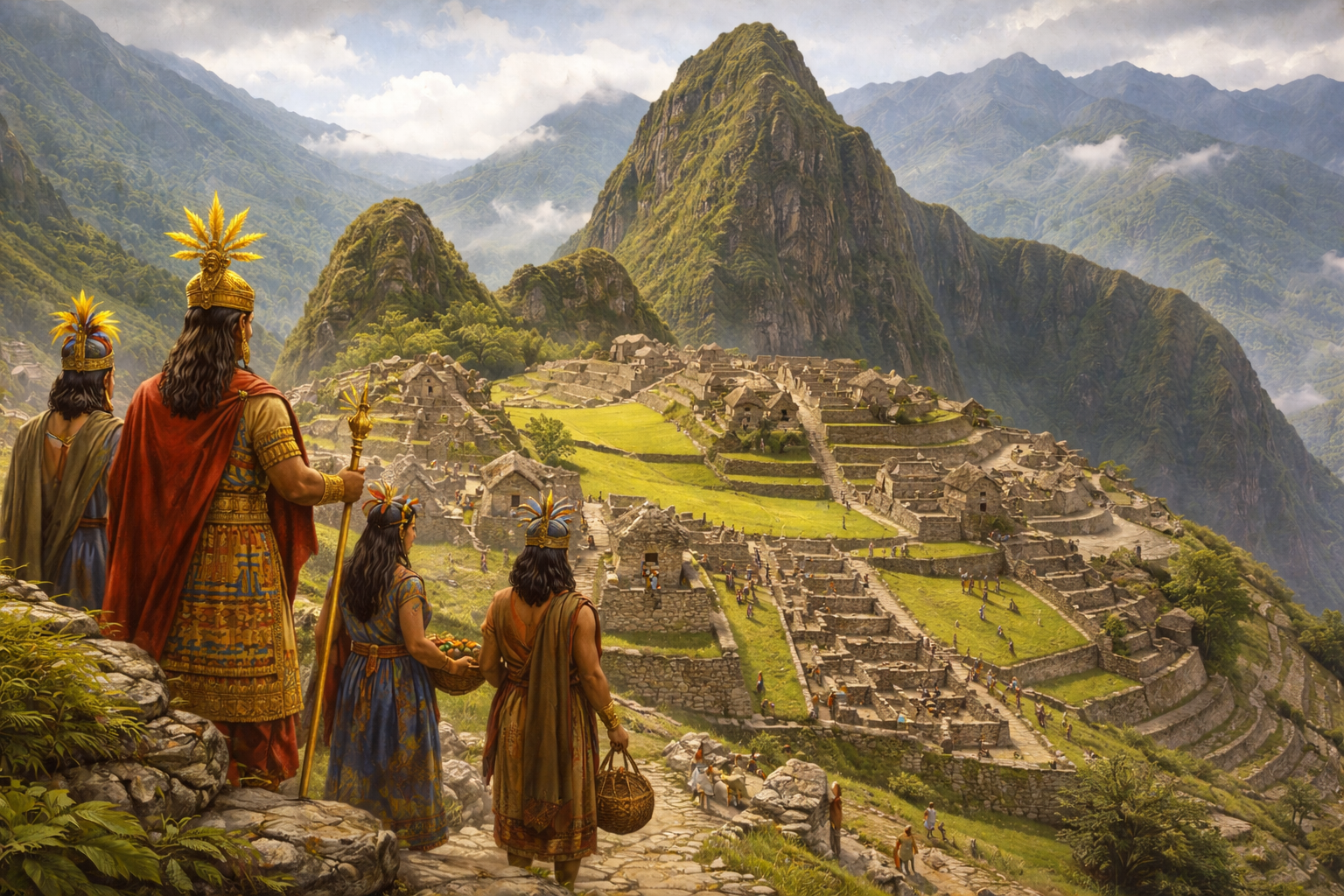
Between 1200 and 1572, across the central-southern Andes, the Tawantinsuyu rose from local aggregation to imperial collapse. In the 13th–14th centuries, Cusco emerged as a regional kingdom, structuring ayllu and cults within a political-ritual framework. In 1438, Pachacuti’s response to the Chanka threat launched unprecedented administrative and military reforms. Between 1450 and 1460, Machu Picchu materialized dynastic prestige and engineering prowess in stone. From 1471 to 1493, Topa Inca Yupanqui turned reforms into expansion, absorbing coastal and highland polities. In 1493–1527, Huayna Capac shifted the center of gravity north toward Quito, recalibrating censuses, tribute, and infrastructure. From 1524 onward, smallpox opened a demographic and dynastic crisis that snapped command chains. Between 1529 and 1532, civil war between Huáscar and Atahualpa drained armies and legitimacy. In 1532–1533, the Cajamarca ambush and the march on Cusco placed Spaniards at the heart of the imperial system. In 1536–1537, Manco Inca attempted reconquest, but the siege of Cusco failed against cavalry and gunpowder. From 1537 to 1572, resistance reorganized at Vilcabamba, combining guerrilla warfare with negotiation. In 1572, Viceroy Toledo’s campaign destroyed the last stronghold with the execution of Túpac Amaru I. In the long term, the Tawantinsuyu’s roads, languages, cults, and political memory continued to shape Andean societies and the colonial order.
This Journey requires a free account to open the interactive experience.