GeoHistory Journey
American Civil War
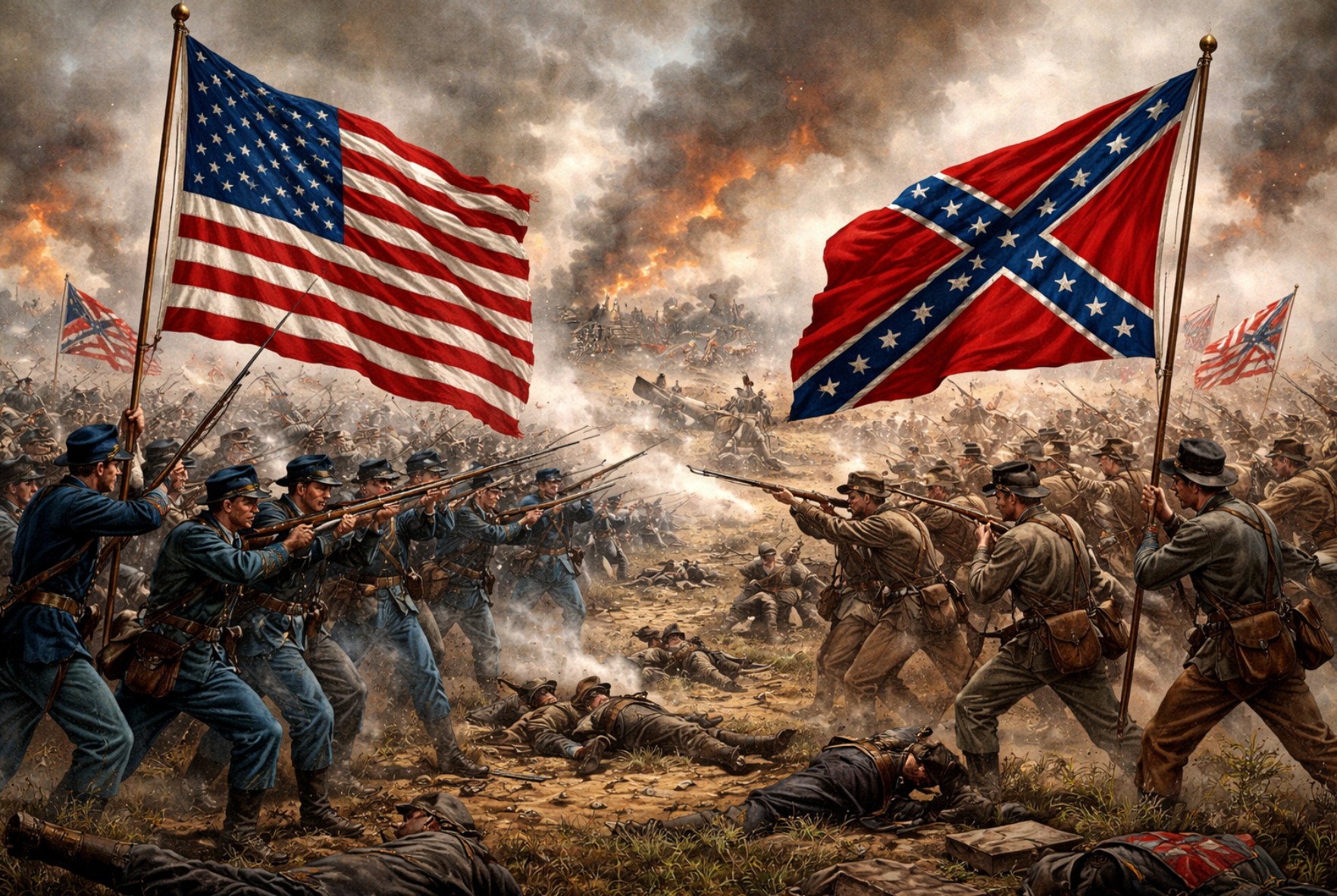
This journey spans North America, focusing on the United States from 1820 to 1865, moving from legislative compromises to military surrender and the final enforcement of freedom in Texas. The cast includes lawmakers like Henry Clay and Stephen A. Douglas, activists like John Brown, generals such as Grant, Lee, and Sherman, political leaders Abraham Lincoln and Jefferson Davis, and the millions enslaved—alongside Northern and Southern societies on a collision course. Politics and constitutional debates revolve around territorial sovereignty and federal power, while economic tensions pit Northern industry and railroads against the cotton plantation economy tied to global markets. Social and religious currents—evangelical abolitionism and antislavery networks—challenge the slave order and fuel mass mobilization. Innovations—railroads, the telegraph, rifled muskets, large-scale logistics, and the practice of “total war”—reshape the conduct of conflict. Commerce and diplomacy surface in the Union blockade and Europe’s refusal to recognize the Confederacy, while the last negotiation attempt at Hampton Roads fails. Crises and battles mark the path: Bleeding Kansas, Sumter, Antietam, Vicksburg, Gettysburg, Sherman's march, and the fall of Richmond. Its legacy is the legal end of slavery through the Thirteenth Amendment, the reaffirmation of the Union, a strengthened federal state, and a civic memory symbolized by Juneteenth.
This Journey requires a free account to open the interactive experience.