GeoHistory Journey
The Phoenicians
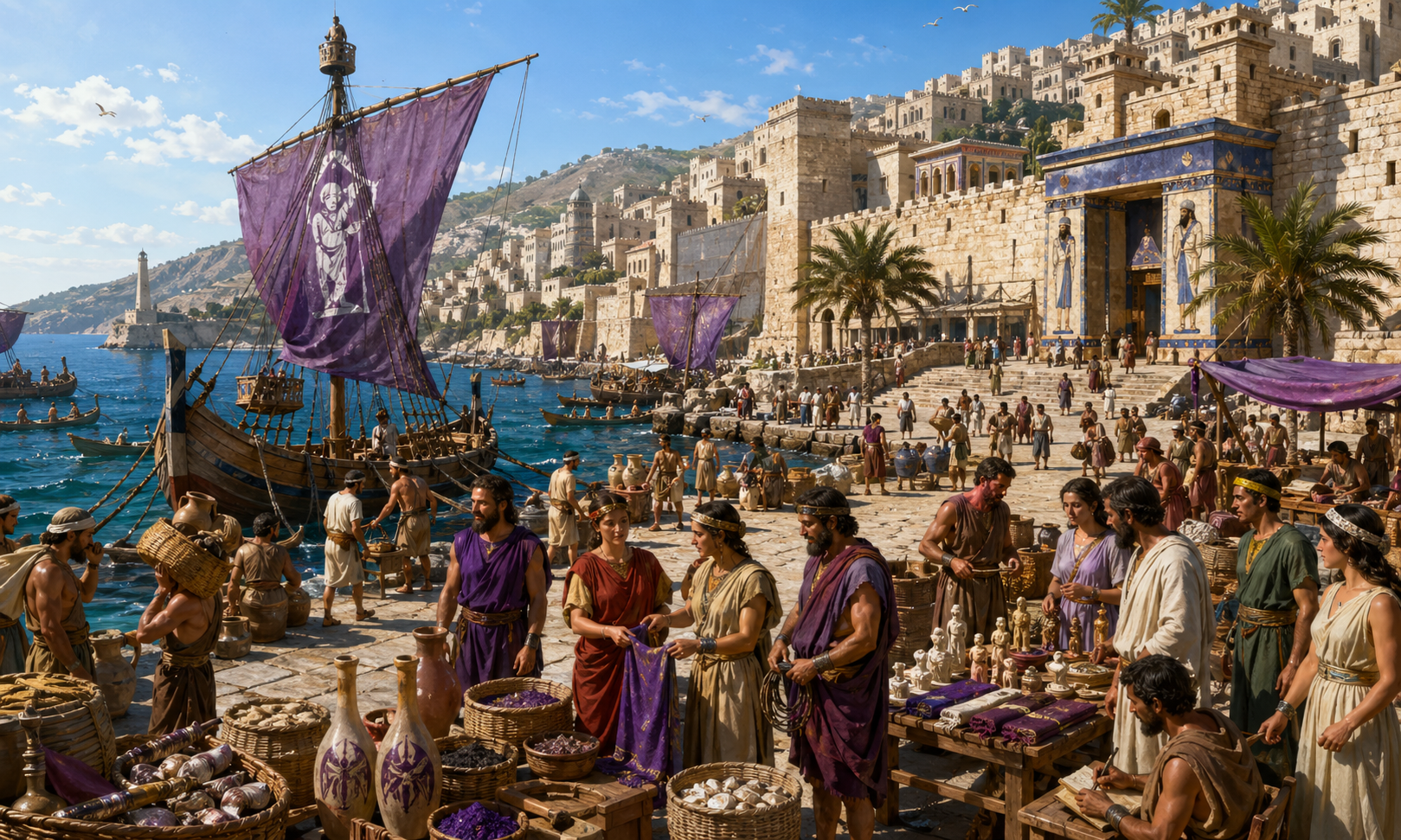
On the rugged Levantine coast, between indented harbors and cedar-clad slopes, a seafaring civilization turned the Mediterranean into a web of exchanges, skills, and shared routes. The Phoenicians did not forge land empires: they trusted the timber of their ships, a keen sense for trade, and supple diplomacy able to deal with pharaohs, Assyrian kings, Persian satraps, and Roman magistrates. Their story is a shifting of balances: cities like Byblos, Tyre, and Sidon grow by turns, reach for Cyprus and the West, found emporia on the African shore, and bridge Iberian bays and islands. The streamlined alphabet they spread empowers new writers, while the hues of purple dye and the smell of pitch from shipyards trail merchants and craftsmen across the seasons. Every advance draws a recoil: the Late Bronze Age collapse, Assyrian and Babylonian pressure, incorporation into the Persian Empire, then Alexander’s shock, and in the West the Greek challenge and Rome’s rise. Carthage inherits and amplifies Phoenician energy until its decisive clash with the Roman power. In the end, the commercial fabric is reabsorbed into a different order: colonies and ports become Roman, yet nautical knowledge, alphabets, and mercantile habits endure, tying East and West long after the political sunset of the Phoenician cities.
This Journey requires a free account to open the interactive experience.