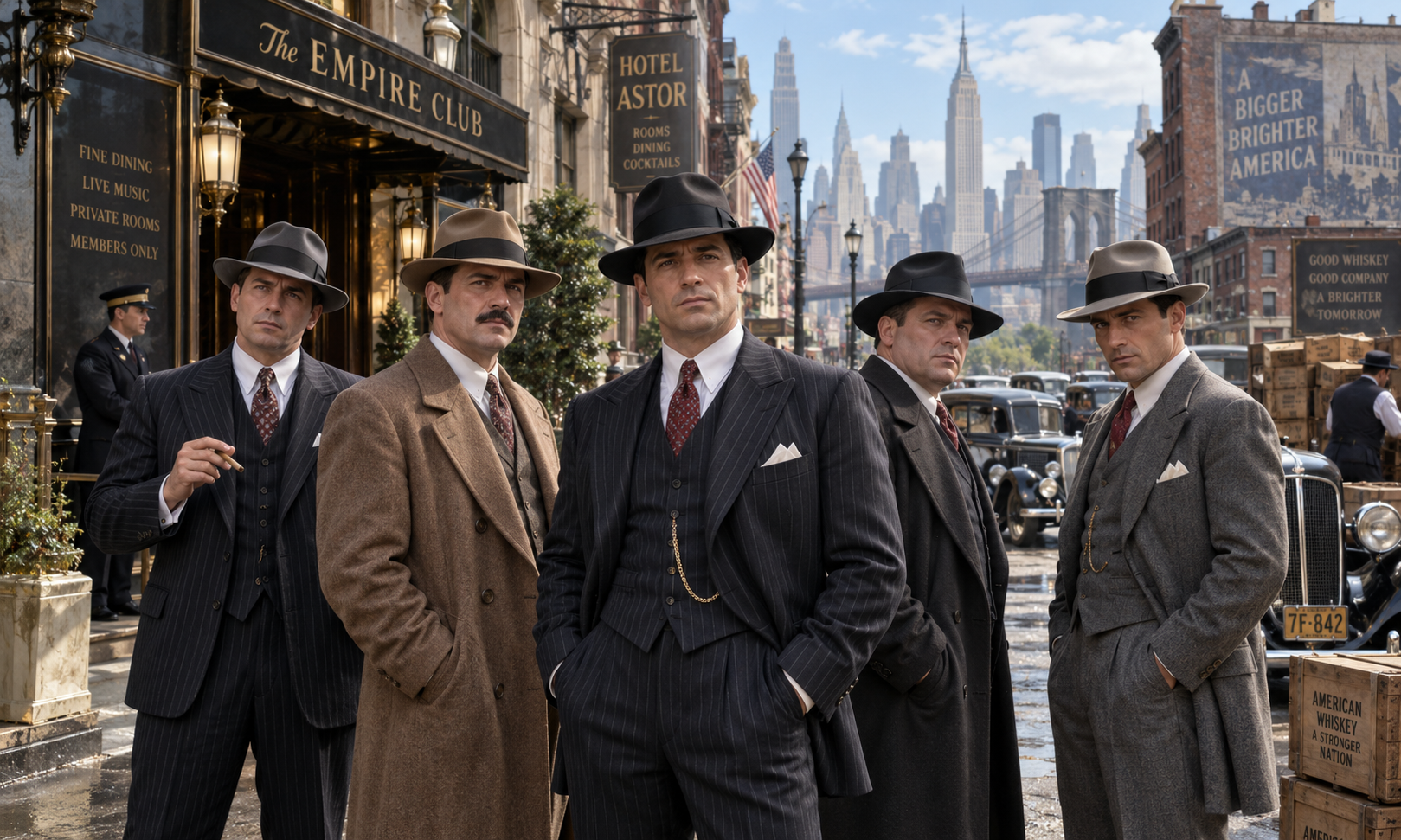
Gangsters and the American Mafia
The American Mafia’s arc begins on the docks and tenement blocks of turn-of-the-century New York, where mass Italian immigration brought kinship networks, mutual aid, and hard-learned survival tactics. In the Little Italies around Mulberry Street and East Harlem, fragile communities faced shakedowns and protection schemes alongside genuine solidarity and aspirations for mobility. Prohibition turned small-time rackets into industry: daring financiers, savvy brokers, and street enforcers built clandestine alcohol supply chains stretching to Canada, the Caribbean, and Europe. The Castellammarese War unleashed open violence until the creation of the Commission and the Five Families imposed a harder discipline that could harvest profits from waterfront unions, construction, and gambling in New York, Havana, and later Las Vegas. Government pushback arrived in waves—from the Kefauver Hearings to Valachi’s testimony, then RICO and the sweeping trials of the 1980s—while families weathered internal wars, schisms, and new routes like the French Connection heroin pipeline and links to Montreal and Palermo. Over time, wiretaps, informants, and coordinated raids broke old patterns of impunity, though not the memory or occasional resurgence of those networks: even twenty-first century busts, a secured fish market, and a boss gunned down on Staten Island carry the echo of power once forged on piers, in back rooms, and in tightly guarded meetings.