GeoHistory Journey
The Samurai
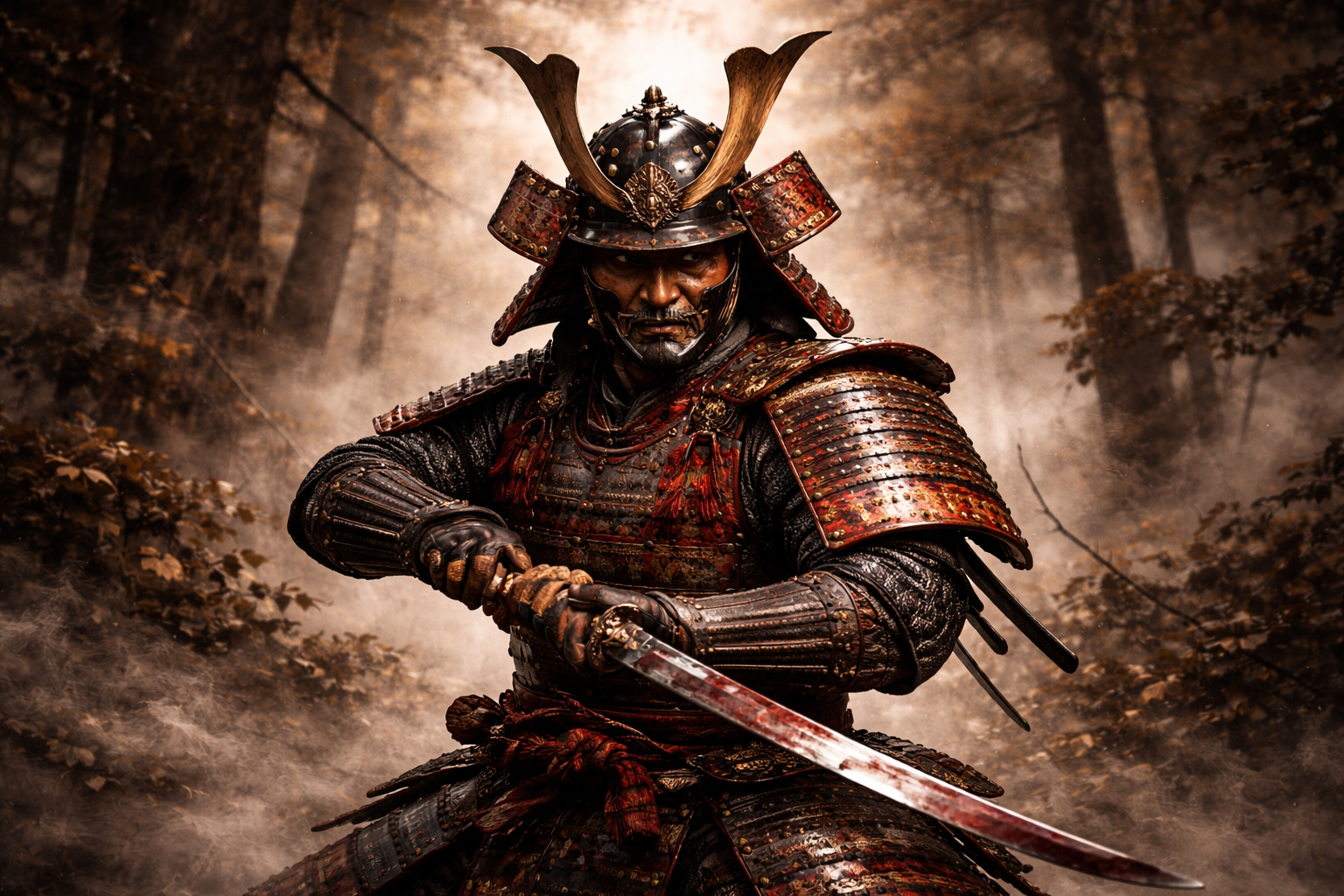
This journey traces, in Japan (Asia), the arc of the samurai from Late Heian to 1877, charting their rise in the provinces and their eclipse in the Meiji era. The period spans roughly 900 to 1877 and moves through Minamoto, Ashikaga, and Tokugawa rule, featuring figures such as Nobunaga, Hideyoshi, and Ieyasu. Involved groups include courtiers and warrior monks, the Taira, Minamoto, Hōjō, Ashikaga, Hosokawa, Yamana, later Hōjō, Ōda, Toyotomi, Tokugawa, regional daimyō, peasants and merchants, as well as external actors like the Mongols and the Portuguese. Politically, palace coups, succession wars, and military regimes dominate, while economically estates are consolidated, land is adjudicated through codes like the Jōei Shikimoku, and controlled trade at Nagasaki intersects with Western contacts. Socially and religiously we see tax revolts and persecuted Christian communities, warrior literature and ethical codifications, and finally conscription that ends the bushi monopoly on arms. Key innovations include the adoption of firearms, the Buke Shohatto regulation of the warrior class, Tokugawa centralization, the sakoku policy, and Meiji reforms such as nationwide conscription and the sword-wearing ban. The narrative is punctuated by conflicts from the Hōgen and Heiji rebellions to the Genpei War, the Ōnin War, Sekigahara, the Shimabara and Satsuma uprisings, and Boshin War battles, with diplomatic breaks like the Convention of Kanagawa ending isolation. Its legacy is Japan’s transformation from a samurai-ruled feudal society into a centralized modern state, with the warrior ethic surviving as cultural memory rather than an armed estate.
This Journey requires a free account to open the interactive experience.