GeoHistory Journey
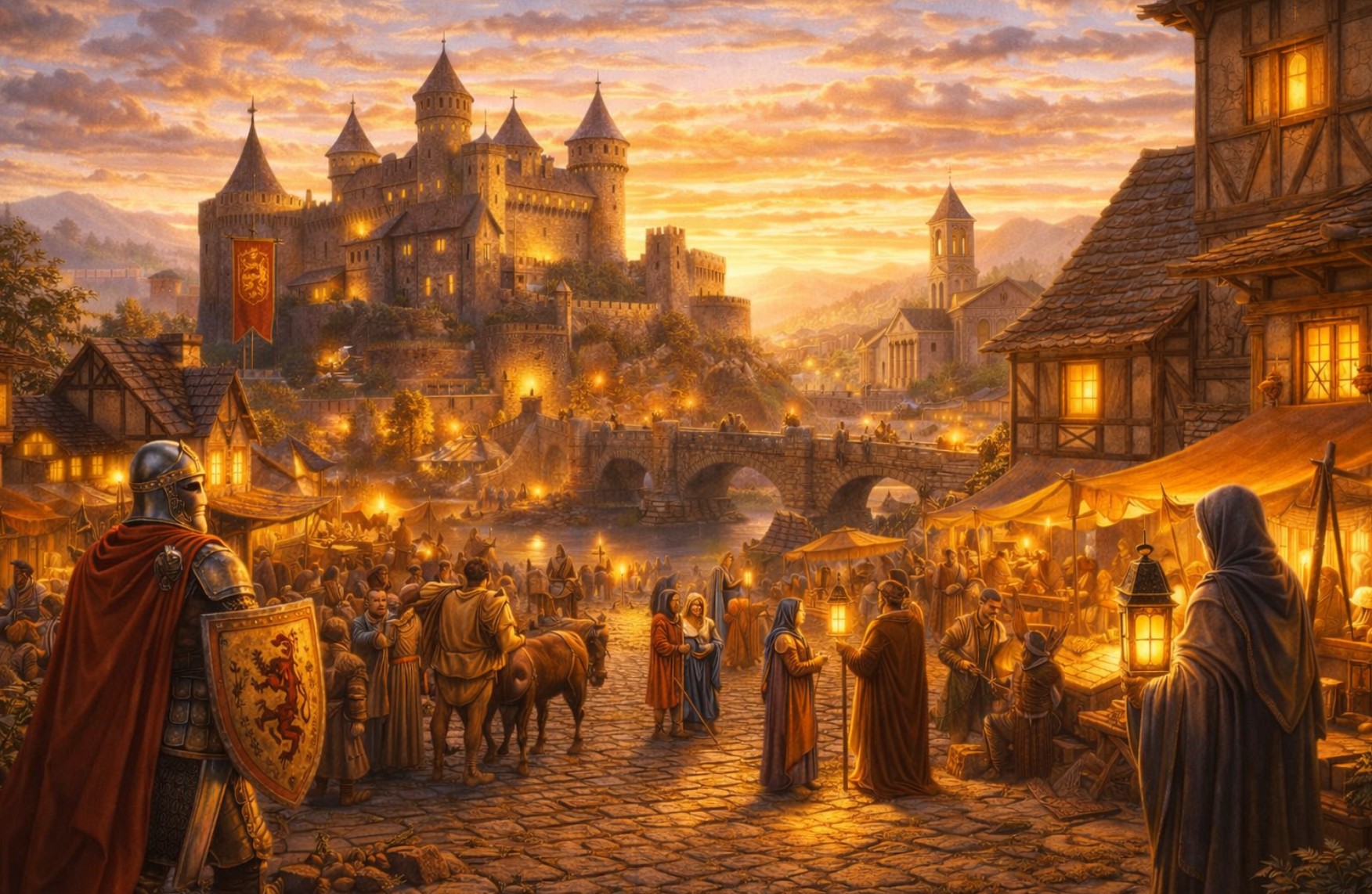
The Middle Ages
This journey spans Eurasia and the Mediterranean—from Italy to Constantinople, from Syria to Hispania, across the Mongolian steppe and to the Atlantic shores—between 476 and 1492. A crowded cast animates it: Ostrogoths and Byzantines, Umayyads and Fatimids, Franks and Normans, the Rus’, Mongols, the English and French kingdoms, the papacy and empires, up to the Ottomans and the Spanish monarchy. Politics pivots on depositions and coronations, schisms and treaties, military and administrative revolutions, state foundings and dynastic fractures. The economy is remapped through grain routes and velvet trade, tolls on the Rus’ rivers, coinage reforms in Damascus, cities revived and then battered by war and plague. Society moves between late Roman continuities and new aristocracies, episcopal towns, feudal countrysides, maritime markets and fairs, culminating in the shocks of the Black Death and wartime taxation. Religion shapes alliances and conflicts alike: the Hijra and the birth of the umma, the rift between Rome and Constantinople, the age of the Crusades, and the Avignon Papacy. Innovations touch law, bureaucracy, warfare, and the writing of power: from the Corpus Juris Civilis to sworn charters, from French artillery to Umayyad monetary reform. Diplomacy and commerce surface in treaties, capitulations, and port privileges, while crises and wars redraw borders and identities. The legacy is twofold: political spaces evolve toward modern states and legal, religious, and cultural traditions still frame Europe and the Near East. Not available: secondary elements not evidenced by the listed events.
This Journey requires a free account to open the interactive experience.