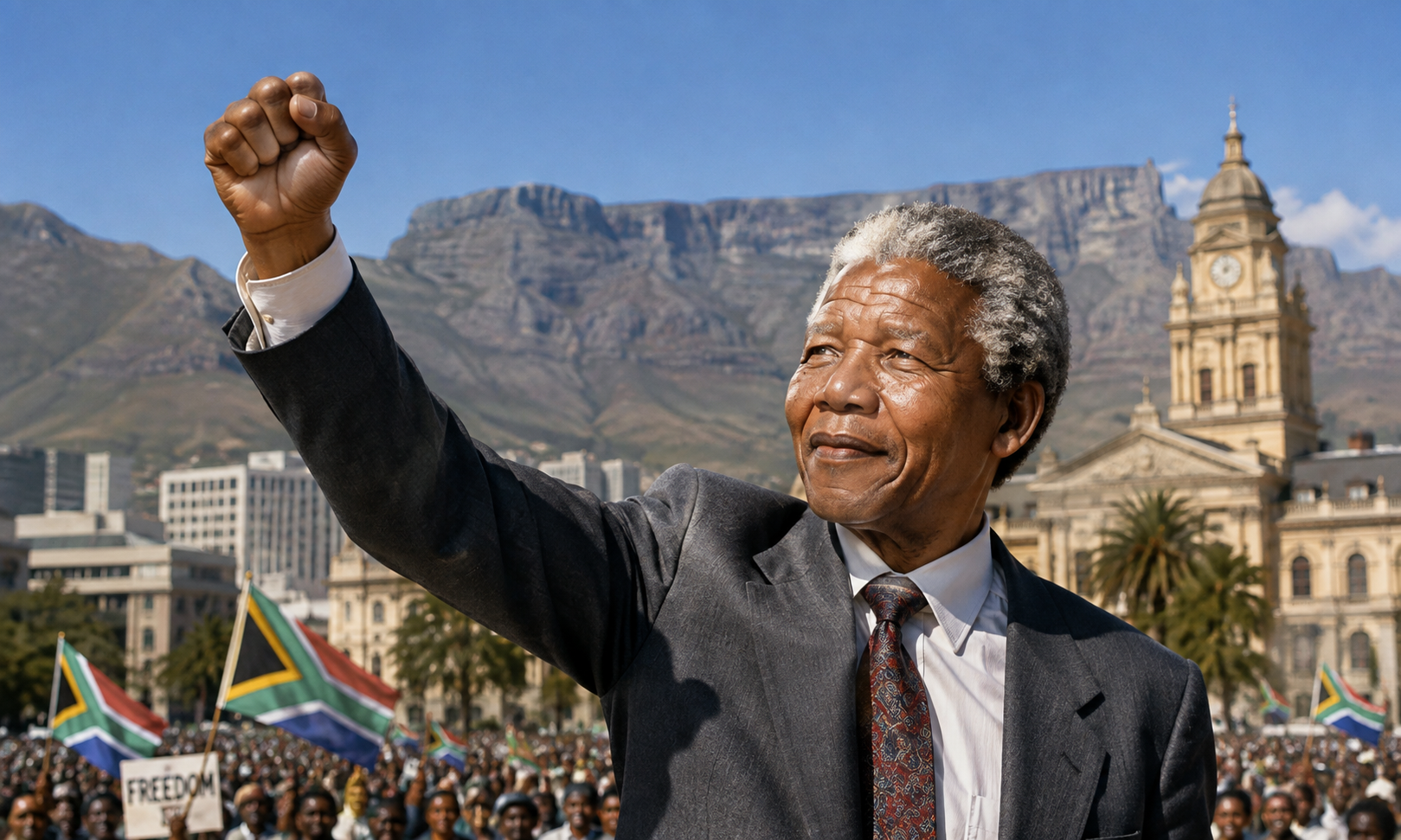
Nelson Mandela
From the banks of the Mbashe River in Thembuland to the balcony of Cape Town City Hall, Nelson Mandela’s life traces the full arc of modern South Africa: from colonial rule and legalized segregation to the making of a constitutional democracy. The thread binding these events is the interplay between personal experience and collective change: the student shaped by the discipline of law, the organizer who pushes the ANC toward mass action, the leader who turns to underground work and sabotage when peaceful avenues are sealed, the prisoner who becomes a moral anchor, the negotiator who opens paths through mutual distrust, the president who anchors reconciliation and rights in fundamental law, and the elder statesman who entrusts a demanding memory to future generations. Each turning point has its actors, places, and documents — from the Freedom Charter to the 1996 Constitution — and yields both immediate effects and wider repercussions: networks of solidarity, repressive responses, new tactics, and ultimately stronger institutions. This journey shows how choices made under pressure, often within narrow margins, can open lasting political space when sustained by organization, patience, and a precise sense of the human stakes.