GeoHistory Journey
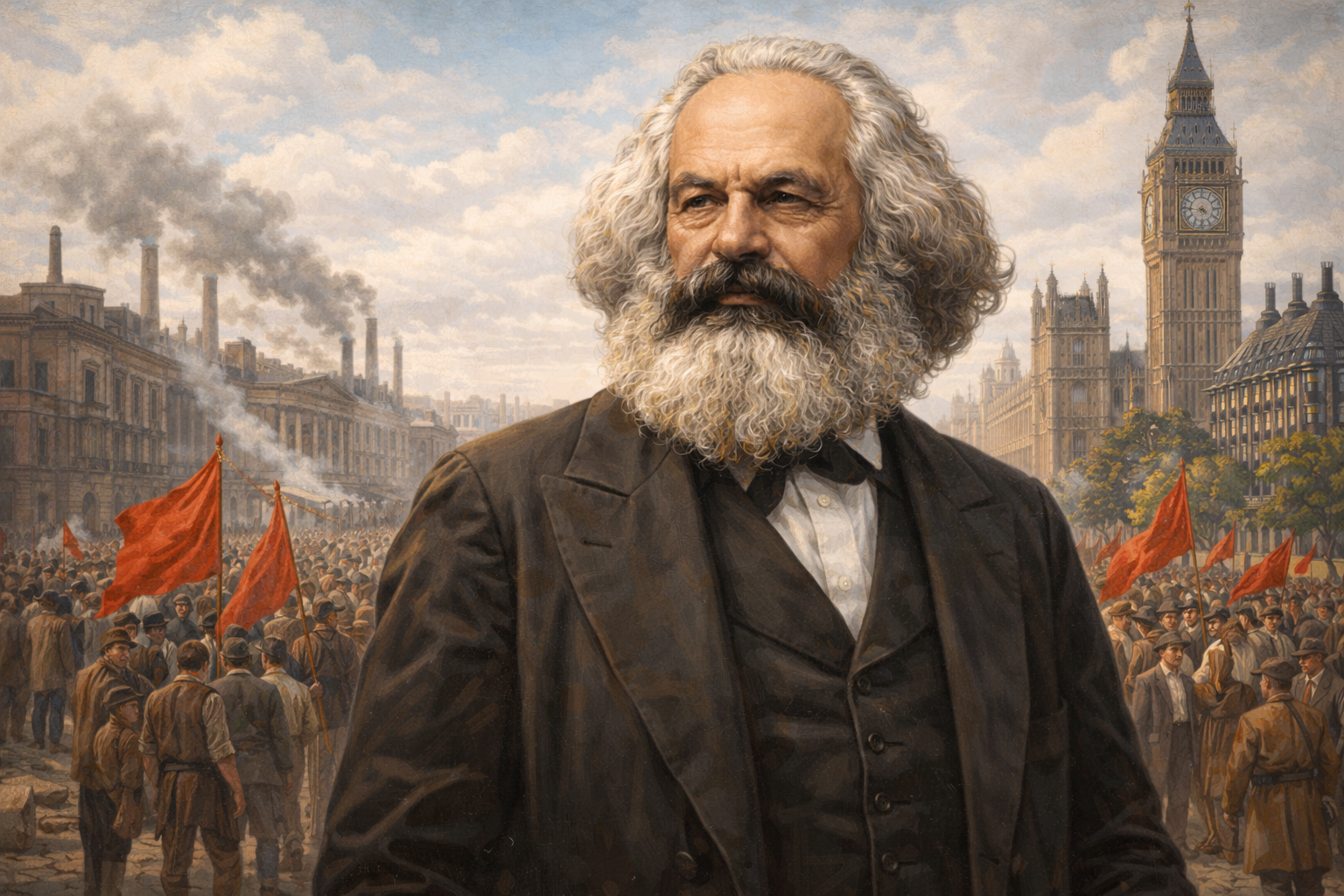
Karl Marx
Between 1818 and 1841, in Prussian Rhineland, Karl Marx shaped his intellectual profile across Trier, Bonn, and Berlin. In 1842–1843, under Prussian censorship, he tested political journalism in Cologne and faced state suppression. From 1843 to 1845, in Paris, he met Friedrich Engels and forged a shared language for the critique of political economy. In 1845–1847, in Brussels, he built committees and joined the reorganization of the Communist League. In 1848, in London, he published the Communist Manifesto, immediately propelled by the European revolutionary wave. In 1848–1849, in Cologne, he experienced the upheaval and was expelled after directing the Neue Rheinische Zeitung. From 1849 to 1863, in London, he combined economic research with international journalism, laying the groundwork for Capital. In 1864–1872, through the International Workingmen’s Association, he coordinated workers’ networks across Europe and America. In 1867, in Hamburg, Volume I of Capital appeared and became a long-term theoretical reference. In 1871, the Paris Commune provided Marx with a case study to rethink socialist strategy. In 1872, at The Hague Congress, internal tensions within the First International erupted and triggered its decline. Between 1873 and 1883, in London, Marx prepared materials for Volumes II–III, which Engels later edited and published. Key concept: from philosophical roots to a global movement, theory and organization reinforced each other across time and regions.
This Journey requires a free account to open the interactive experience.