GeoHistory Journey
The Byzantine Empire
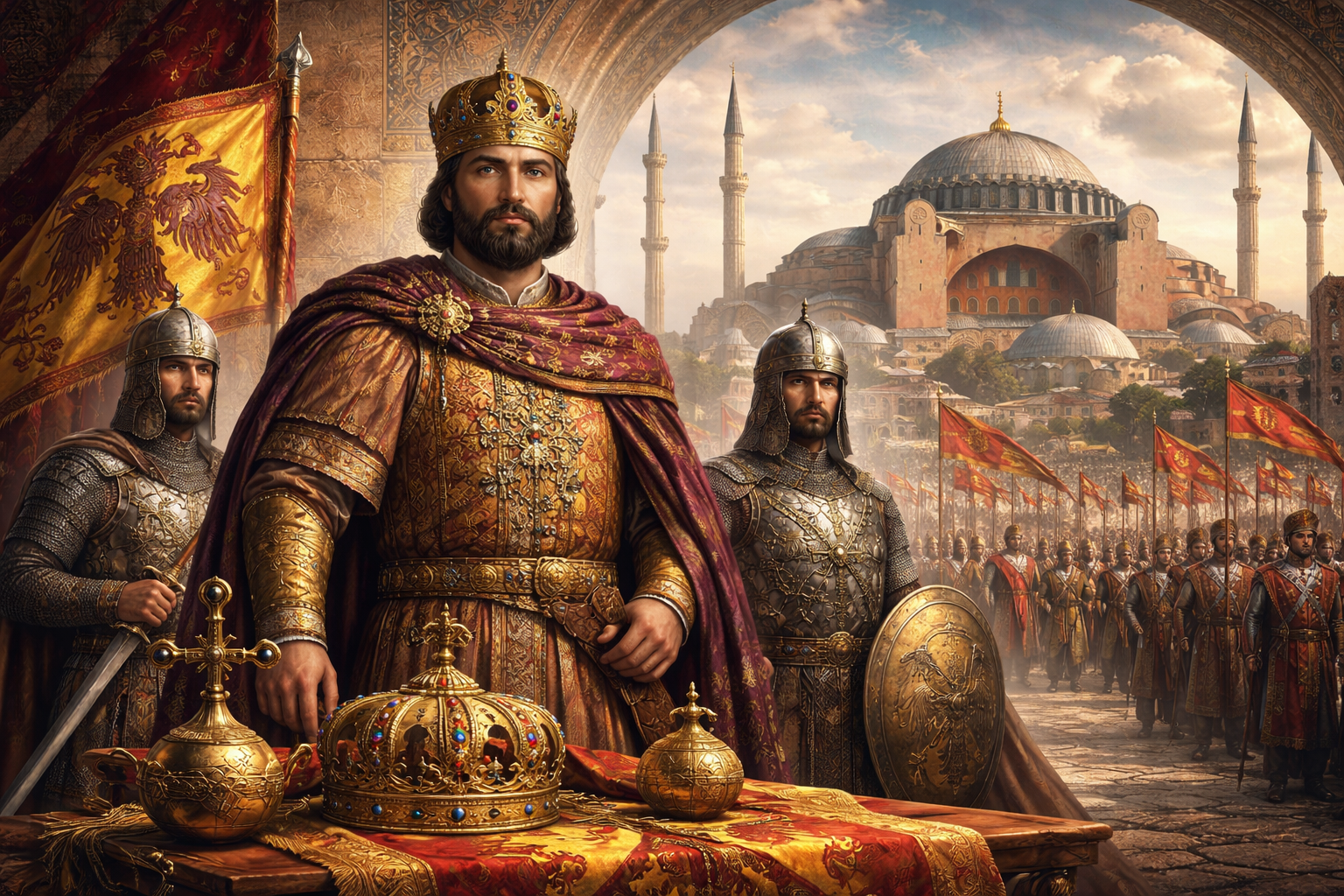
From the Bosporus to the final stand on the Theodosian Walls, this journey spans the Eastern Mediterranean, the Balkans, and Anatolia from 657 BC to AD 1453. Greeks and Eastern Romans—becoming Byzantines—interact and clash with Sasanian Persians, the Arab caliphates, Bulgars, the Rus’, Seljuks, Latin crusaders, and Ottomans. Politics pivots on imperial centralization, a sophisticated bureaucracy, dynastic struggles, and ecclesiastical disputes culminating in iconoclasm and the schism; the economy turns on Black Sea trade, the loss of Egyptian grain, urban manufacture, and reengineered taxation. Religiously, Constantinople hosts decisive councils and attempts union with Rome, while society, battered by plague and civil war, endures and adapts. Innovations such as Greek fire, legal codification, and audacious architecture like Hagia Sophia shape a far-reaching cultural hegemony. Diplomacy and commerce weave treaties and alliances, often short-lived, as wars and sieges—from Nineveh to Manzikert and finally 1453—redraw borders and hierarchies. Legacy: the transmission of classical learning, the Orthodox tradition, and a model of statehood that, though fallen, survives in churches, law codes, and the cities of the Mediterranean world.
This Journey requires a free account to open the interactive experience.