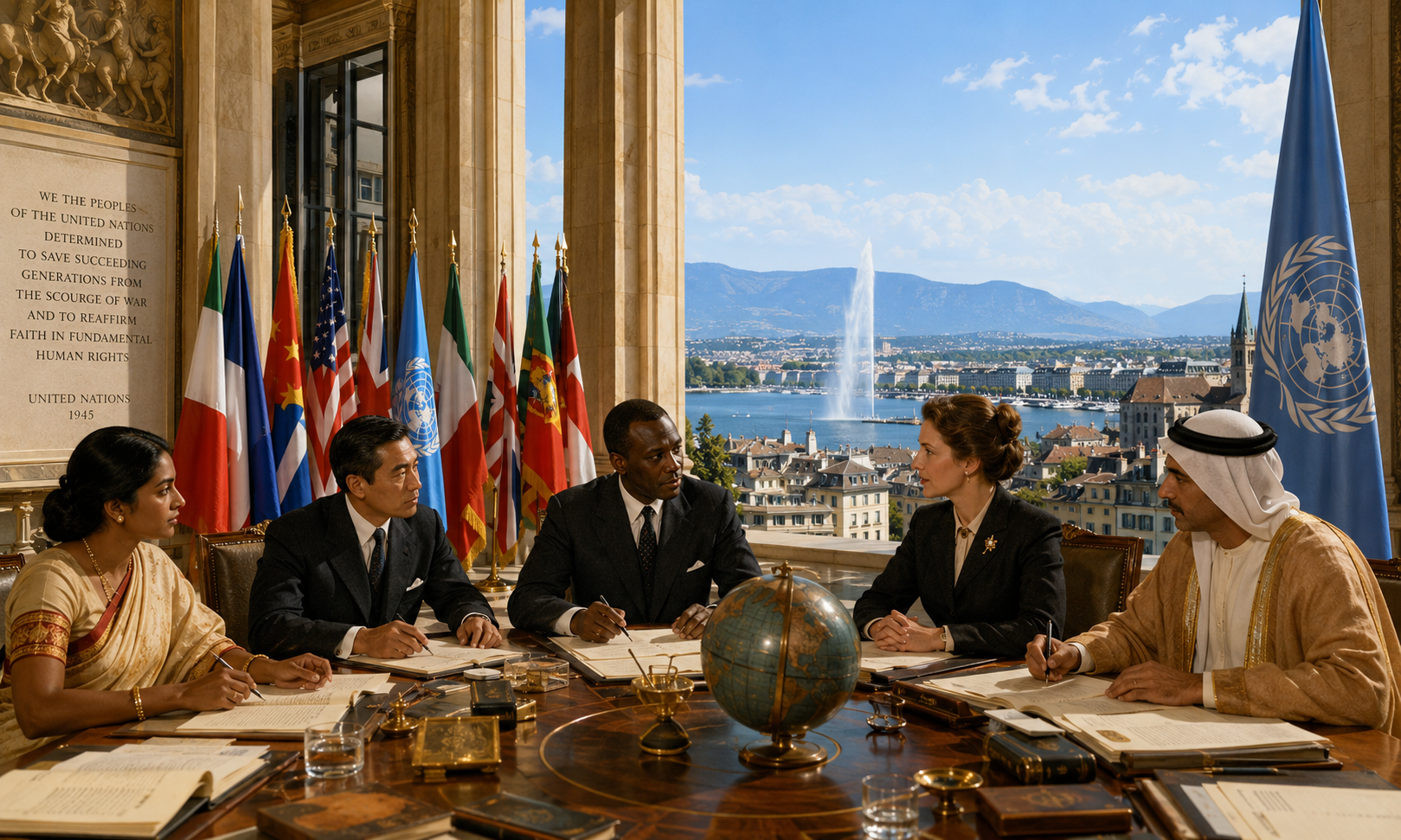
The Birth of the UN and Global Institutions
The making of global institutions stems from a recurring tension: preventing international politics from being mere balance-of-power maneuvering or, worse, a battlefield without rules. From the nineteenth-century effort to reorder Europe after Napoleon to late twentieth-century environmental treaties and development goals, one idea takes root: cooperation must be stabilized through enduring rules, permanent forums, and technical tools resilient to crises. First come congresses and humanitarian conventions, then standard-setting bodies, the law of war, courts, economic unions, and specialized agencies. Two world wars turn urgency into architecture: the UN Charter, Bretton Woods, human rights. In the postwar era, development, health, and the environment are woven into the same framework. Each milestone adds a brick—from conflict prevention to trade, from refugee protection to climate action. The outcome is not world government but a web of rules and institutions that, however imperfect, provide procedures, shared vocabularies, and venues where competing interests can collide without destroying one another.