GeoHistory Journey
The Birth of Israel and the Arab–Israeli Conflicts
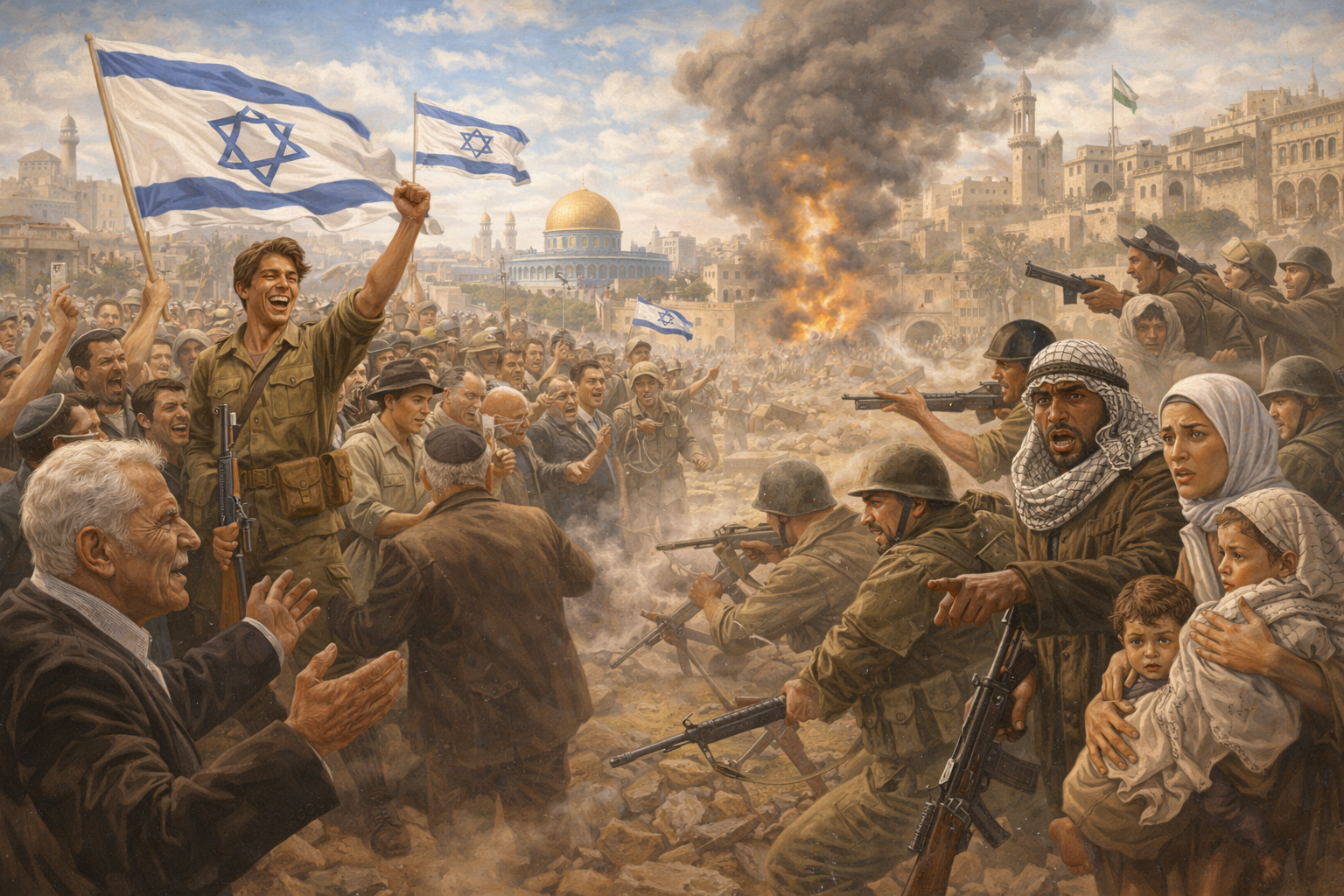
From the late nineteenth century into the twenty-first, the Levant undergoes successive waves of migration, imperial decisions, and local clashes that reshape the region. Under Ottoman rule, early aliyot establish agricultural colonies and cooperative networks that draw European capital and fuel tensions with Arab communities. In Europe, political Zionism organizes through congresses and lobbying that influence governments and peace conferences. During and after World War I, secret correspondences, declarations, and agreements (Hussein–McMahon, Sykes–Picot, Balfour, San Remo) draw mandates and borders that stack incompatible promises. Under the British Mandate, riots, reprisals, and inquiry commissions pace a spiral of conflict and control. The 1930s migration waves, amplified by the Holocaust, change demography and strengthen the Yishuv’s institutions. The end of the Mandate brings the 1947 UN partition, the 1948–49 war, and the Nakba, producing new borders and a large-scale Palestinian diaspora. In the following decades, conventional wars and wars of attrition reset power balances around Sinai, the Suez Gulf, Jerusalem, and the Golan. At the same time, terrorism, popular uprisings, and rival leaderships (PLO, Hamas) turn the conflict into a multilevel contest. From multilateral diplomacy to bilateral protocols (Camp David, Oslo), partial autonomy and selective peace treaties emerge. Between 2000 and 2020, negotiating deadlocks, intifadas, and periodic Gaza wars consolidate a state of chronic instability. Since 2020, regional normalizations, wave-like crises, and new international judicial pressures interact with regional mediation for truces and hostage deals. The long-term pattern reveals a pendulum: bounded diplomatic gains followed by security crises, within a framework where geography, historical memory, and external actors remain decisive.
This Journey requires a free account to open the interactive experience.