GeoHistory Journey
The Second Gulf War (2003–2011)
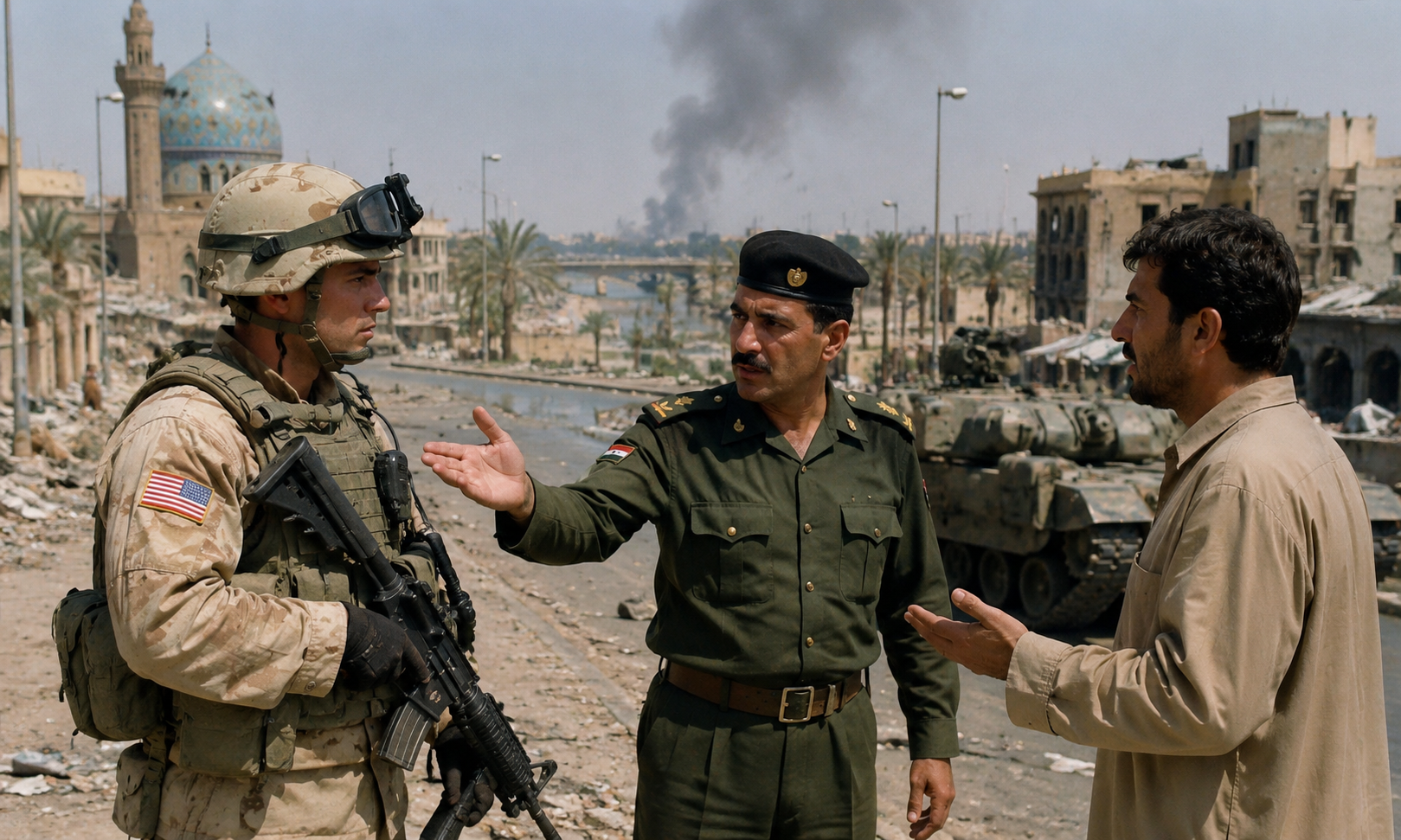
The road to the 2003 Iraq War begins in the late Cold War era, amid oil, disputed borders, and attempts to redraw regional security. Iraq’s invasion of Kuwait triggers an international response and, after liberation, leaves a postwar order of sanctions and UN inspections that restrains Baghdad without rebuilding the state or economy. Over the next decade, the Oil-for-Food Programme, punitive raids, and political battles in Washington and London harden distrust of Saddam, while Iraqi society—impoverished by sanctions—frays. After 9/11, U.S. strategy pivots to prevention and regime change, and a cadence of dossiers, speeches, and resolutions marks the path to intervention. The 2003 campaign topples the regime swiftly, but sweeping administrative decisions—de-Ba’athification and dissolving the army—hollow out state structures, opening the door to insurgency, sectarian violence, and abuses that erode the coalition’s legitimacy. In parallel, a political track emerges—sovereignty transfer, elections, a constitution—often suspended between aspiration and ground realities. The 2007 surge and the Anbar Awakening curb violence and set conditions for a withdrawal under a bilateral accord; yet institutional gaps, internal rivalries, and regional fractures feed a new threat, ISIS, which seizes Fallujah and Mosul in 2014. The ensuing international coalition and the battle for Mosul show that lasting stability depends not only on military victory, but on rebuilding inclusive institutions and a social contract resilient enough to endure.
This Journey requires a free account to open the interactive experience.