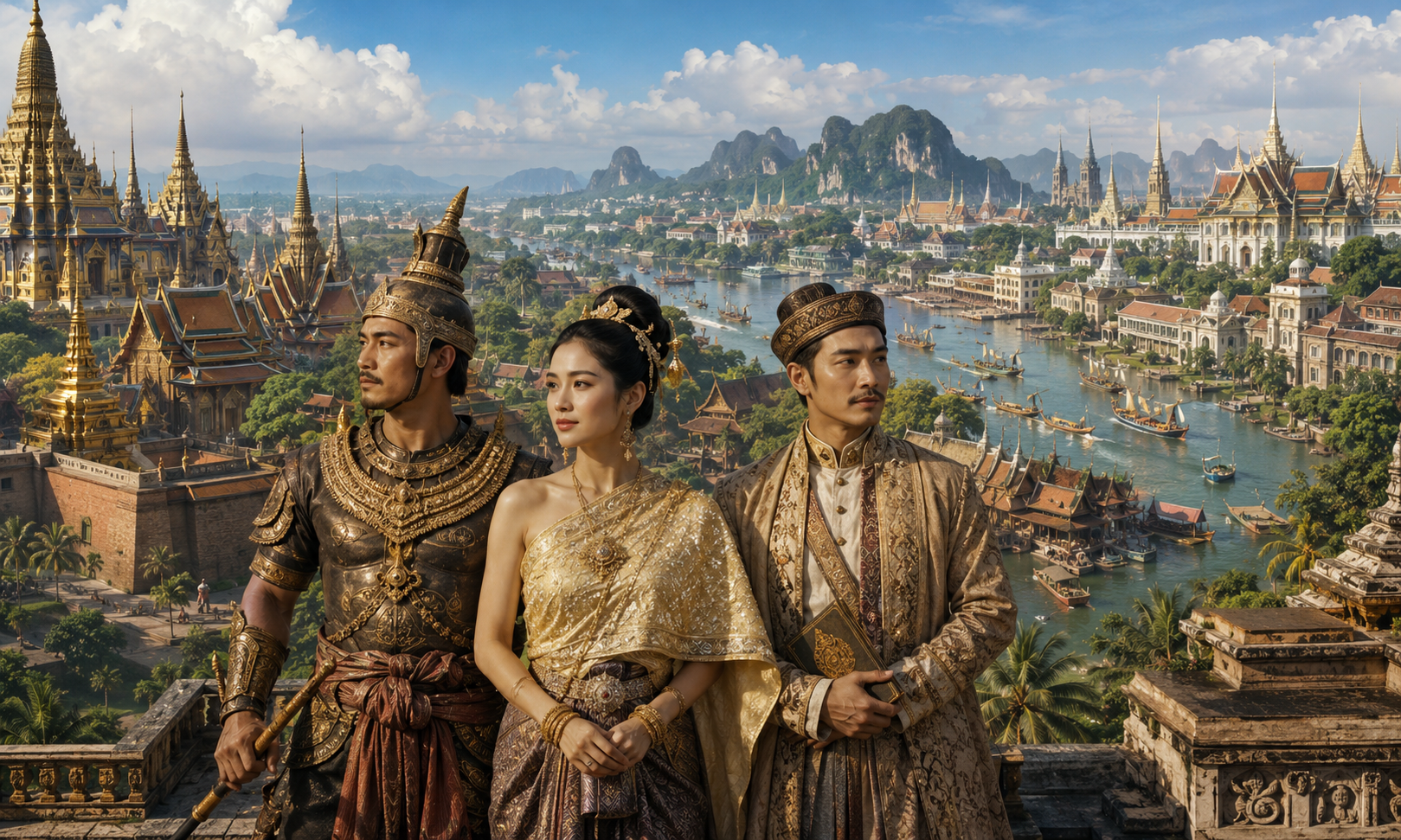
The History of Thailand
In the heart of mainland Southeast Asia, between uplands, floodplains, and sea lanes open to India and China, a political and cultural space took shape by absorbing and reshaping outside influences. From Neolithic communities learning rice cultivation and pottery firing, the region moved into bronze and iron networks woven through wider exchange. Mon city-states and Khmer power anchored urban layouts, cults, and scripts; later Tai migrations consolidated new centers like Sukhothai and Lanna. Ayutthaya built long-term regional power, weathering revolutions, invasions, and revivals until its fall in 1767. Reunification under Thonburi and then Bangkok launched durable institutions, reforms, and global contacts that preserved independence in the 19th and early 20th centuries, albeit with territorial concessions and administrative modernization. The 20th century brought constitutions, coups, foreign alignments, and protest cycles that define contemporary politics. Across this arc run enduring threads: rice and rivers, the craft of negotiating among great powers, the capacity to refound the state after deep crises, and a society that, facing new balances, seeks representation and shared rules.