GeoHistory Journey
The History of the Olympic Games
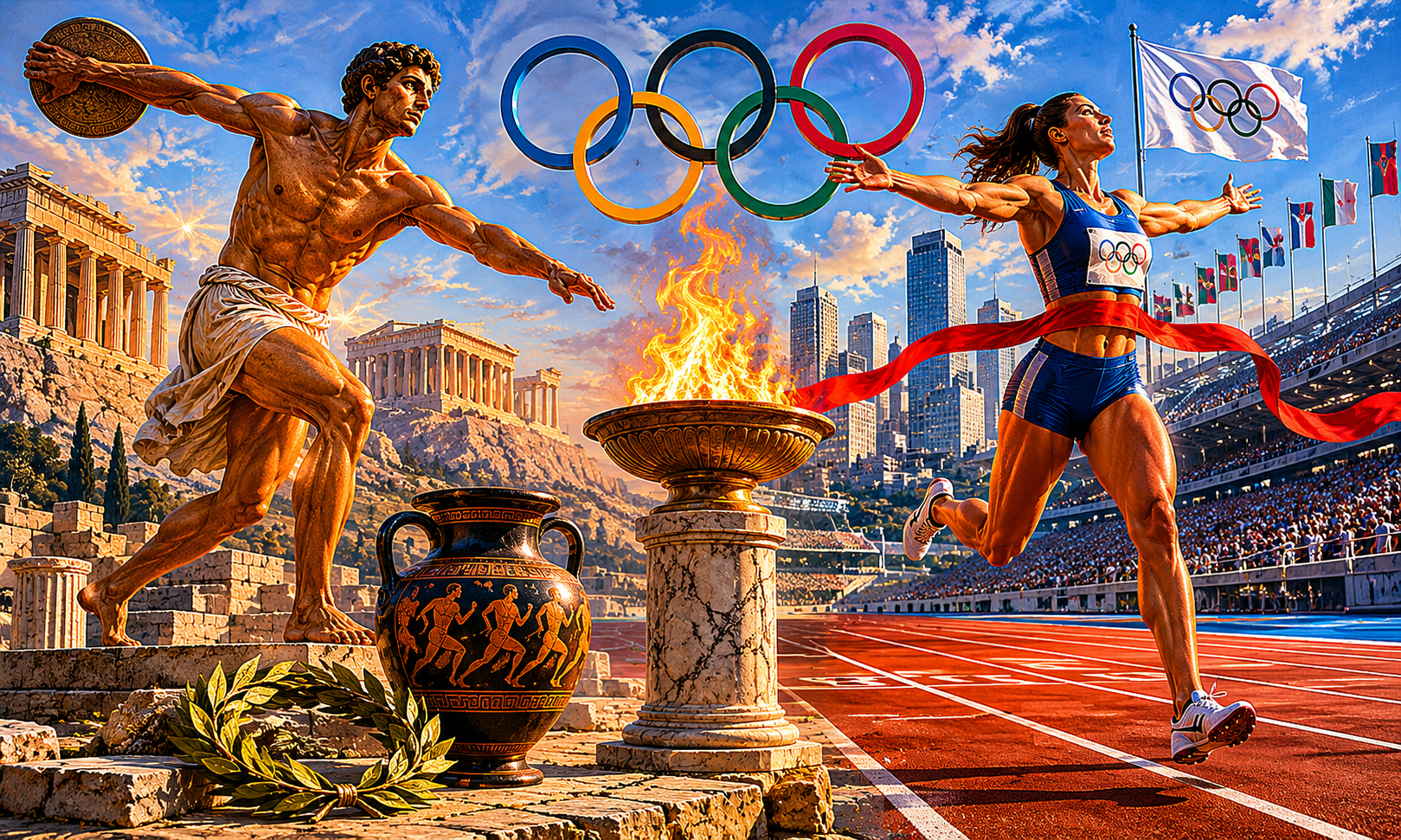
From the banks of the Alpheios, where the cult of Zeus took shape among sacred groves and early altars, to the global stage of today’s mega-events, the Olympics’ story crosses religion, politics, art, and media. At the outset, the Games were a ritual truce that paused local wars to celebrate strength, measure, and civic prestige; in the Greek poleis a victor’s name could weigh as much as a treaty, while poets, sculptors, and architects wrapped competition in an aura of eternity. Rome turned agon into spectacle and power; Christianization relegated it to the past; centuries later the site lay buried until nineteenth‑century archaeology and philanthropy nurtured a modern revival. The twentieth century reshaped that legacy: new transnational institutions, icons and rituals emerged, along with the inevitable entanglement with wars, boycotts, propaganda, civil rights, and the science of the body. Over time, the Olympic arena became a laboratory of inclusion and common rules—from flag to torch, from anti‑doping to the Refugee Team—and a testing ground for leaner governance promising sustainability and continuity. Along this long arc, each turn retains a trace of the previous one: sacrality becomes sporting ethics, civic celebration turns into diplomacy, and competition bridges ancient memory with present expectations.
This Journey requires a free account to open the interactive experience.