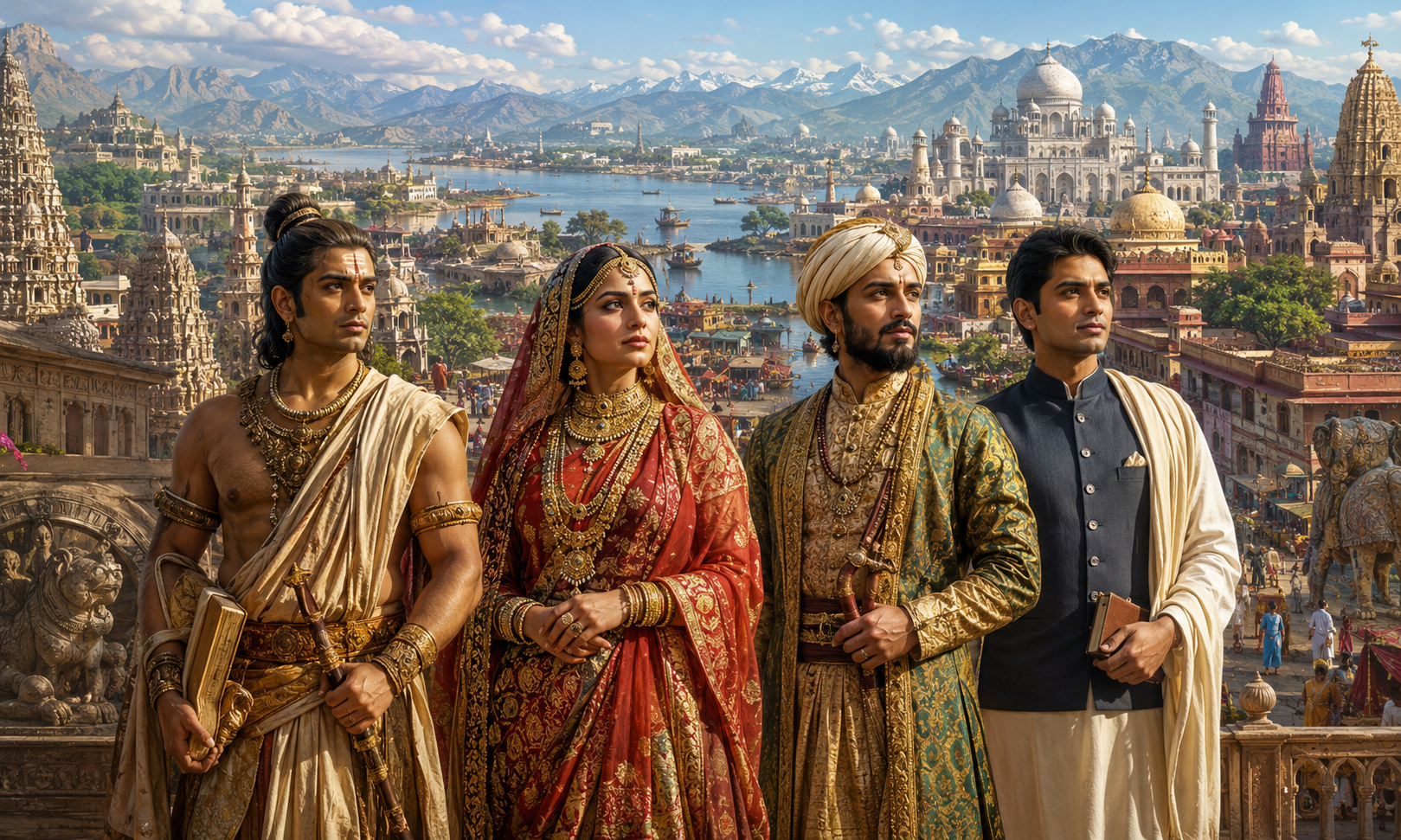
The History of India
From the first traces on rock walls to twentieth-century constitutional debates and the global challenges of the twenty-first century, the Indian subcontinent undergoes deep transformations that reshape environment, institutions, and ideas. Hunter-gatherer bands cluster around shelters and caves; with Mehrgarh and the Indus valley come agriculture, cities, craftsmanship, and trade networks. Their legacy flows into new cultures: the Vedic world, territorial polities, and religious arenas where Buddhism and Jainism take shape. Expansive dynasties, from Magadha to the Mauryas, attempt to bind lands and peoples with law, treaties, and imperial symbols, while fractures and external contacts remix languages, techniques, and artistic forms—from Greco-Buddhist Gandhara to Dravidian temples. Through invasions, sultanates, and empires, the political landscape layers; with oceanic routes and the East India Company, colonial power fuses commerce and coercion, sparking reform, resistance, and new collective identities. In the twentieth century, the tension among democratic aspirations, conflict, and decolonization forges a modern state grappling with frontiers, pluralism, development, and security: the common thread is an ongoing negotiation between power and society, memory and change, from the Stone Age to the Space Age.