GeoHistory Journey
Ancient Rome
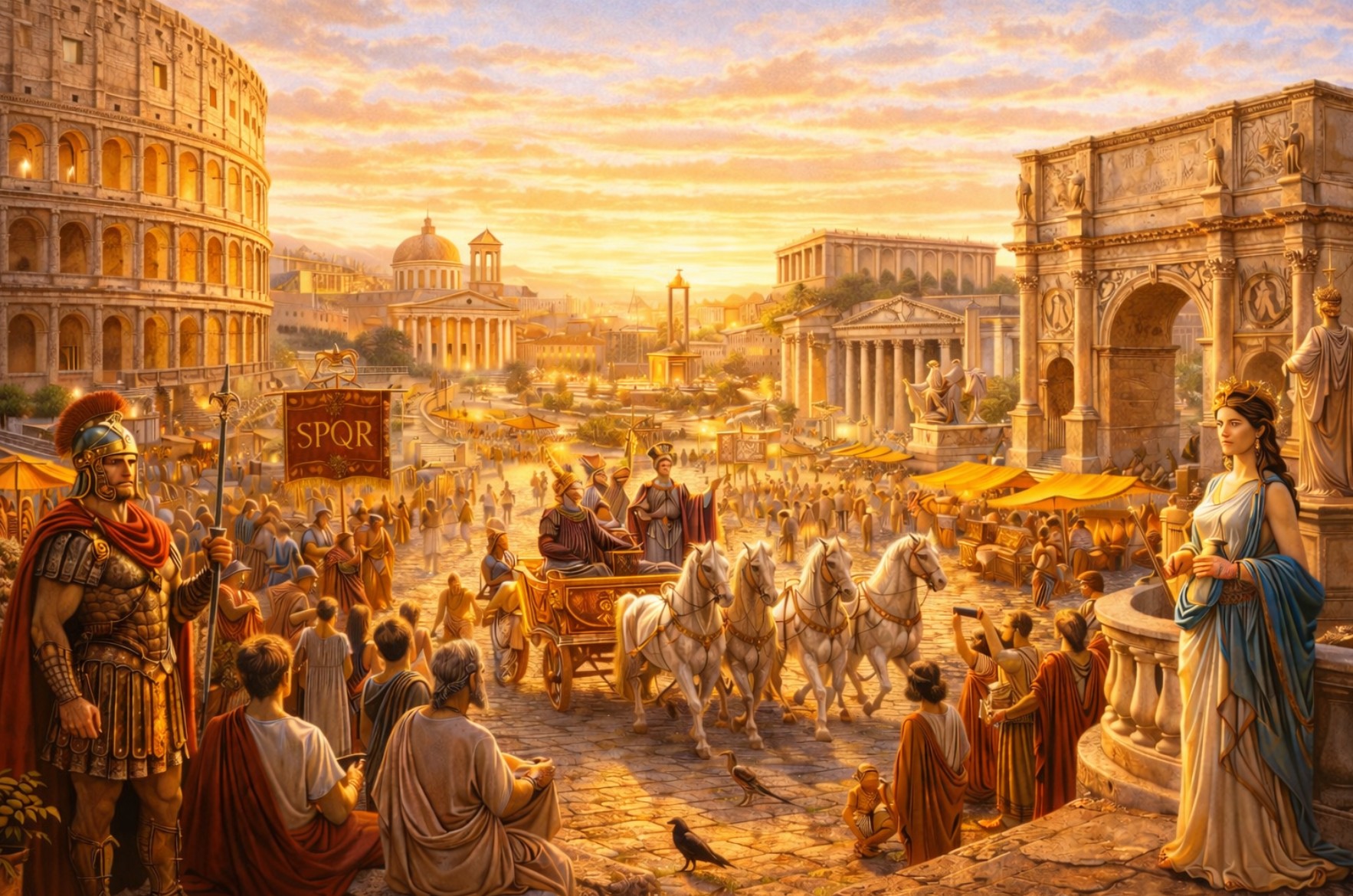
From its legendary birth on the Tiber to the creation of the Republic, Rome shapes its identity through ritual, law, and ambition. The Gallic sack burns in collective memory, turning fear into military discipline. Wars across Italy and then against Carthage push Rome into the Mediterranean, with Sicily and Africa becoming milestones of expansion. External success deepens internal fractures—from the Gracchi to the Social War—until Sulla’s violence makes power openly coercive. The First Triumvirate strains the Republic, and Caesar’s civil war against Pompey decides the fate of its institutions. Caesar’s assassination doesn’t restore freedom; it unleashes new conflicts that end at Actium. With Augustus, the Principate emerges, and the Pax Romana is written in monuments and a more predictable imperial order. Even in stability, nature asserts itself when Vesuvius buries Pompeii and Herculaneum. The third‑century crisis forces reinvention, while the Edict of Milan and Constantinople shift the empire’s spiritual and political map. Finally, the sack of 410 and the events of 476 close the western imperial chapter—Rome endures, but now as inheritance.
This Journey requires a free account to open the interactive experience.