GeoHistory Journey
Ancient Egypt
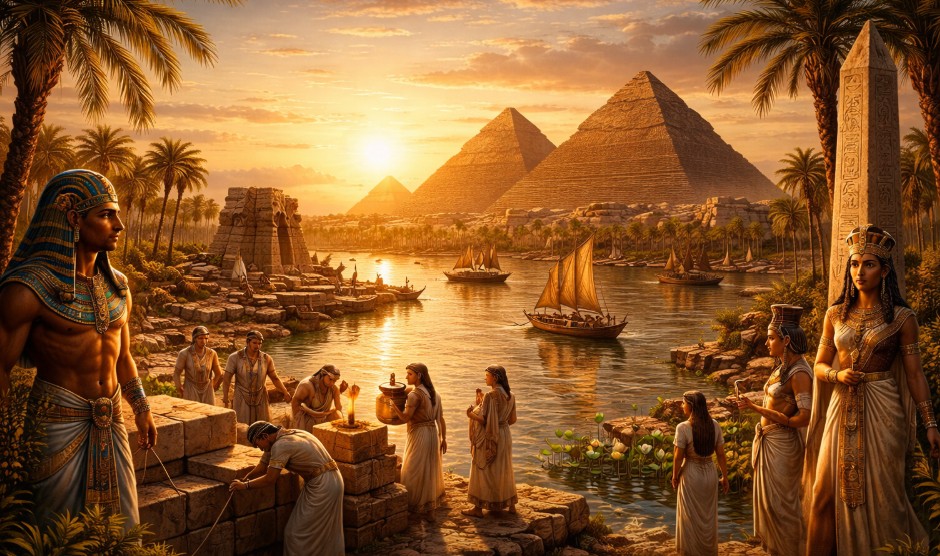
From the state’s birth under Narmer to the rise of Memphis, Egypt emerges as a kingdom able to bind the Nile into a single political and sacred order. With Djoser’s stepped pyramid at Saqqara, architecture becomes a language of eternity, and the Fourth Dynasty launches the Pyramid Age that peaks at Giza with Khufu and Khafre. The First Intermediate Period fractures unity, but Mentuhotep II reunifies the land and sets the Middle Kingdom in motion, later strengthened by Senusret III’s administrative and frontier policies. In the Delta, Hyksos rule forces adaptation and sparks reconquest: Ahmose I founds the New Kingdom, and Egypt projects power abroad through Thutmose III’s campaigns. Akhenaten’s Amarna revolution disrupts the balance at home, followed by a restoration under Tutankhamun. Under Ramesses II, empire seeks durability through diplomacy as well as force, before the Twentieth Dynasty’s crisis signals decline and fragmentation. The Saite renaissance attempts revival, yet Alexander’s conquest opens the Ptolemaic era and a renewed Mediterranean focus. Cleopatra VII’s reign closes the last independent chapter as Egypt becomes part of Rome’s world, leaving behind a monumental legacy that continues to shape how antiquity is imagined.
This Journey requires a free account to open the interactive experience.