GeoHistory Journey
The Pre-Columbian Civilizations
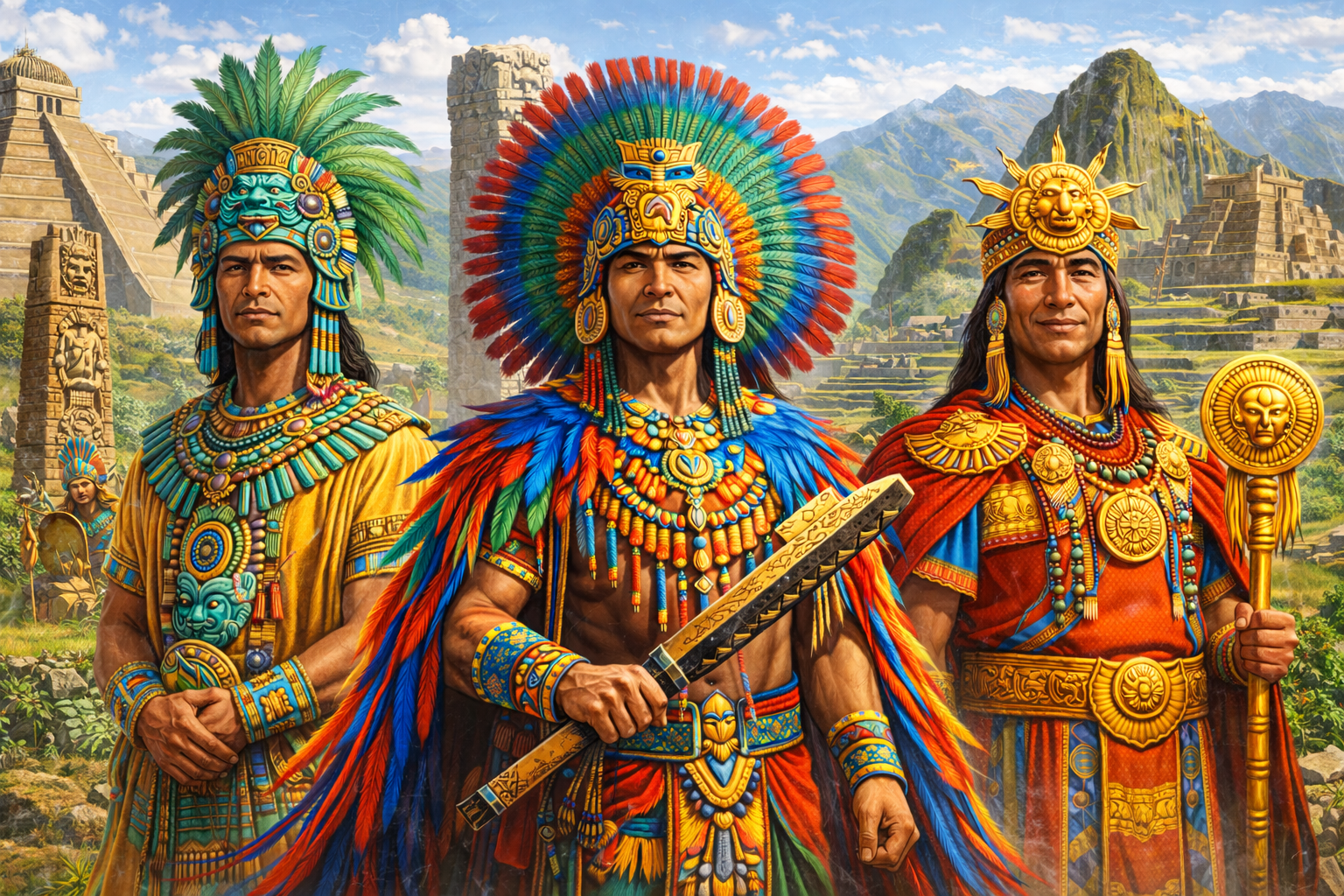
From the Petén rainforests to Lake Texcoco and the high Andean passes, this journey spans Mesoamerica and the Andes between 2000 BC and AD 1572. It follows the Maya, the Mexica-Aztecs, and the Inca, alongside rival cities and key allies such as Tlaxcala and the Chimú. Sacred kingship, tribute systems, and communal institutions take shape as economies rest on maize agriculture, regional markets, lake-borne chinampas, and the Andean mit'a. Religion saturates politics—from solar and rain cults to ritual sacrifice—sanctioning decisions and conquests. Breakthroughs define the era: Maya writing and calendars, Aztec hydraulic works, Inca imperial roads and quipu accounting. Trade and diplomacy braid together jade and obsidian, cacao and shell, metalworking and marriage alliances, often punctuated by famine, drought, warfare, and dynastic crises. The arc culminates in sieges and alliances that redraw power, from the fall of Tenochtitlan to the last stand at Vilcabamba. The legacy is twofold: monumental cities and enduring knowledge systems, and the rupture of conquest that reshaped institutions and memory.
This Journey requires a free account to open the interactive experience.