GeoHistory Journey
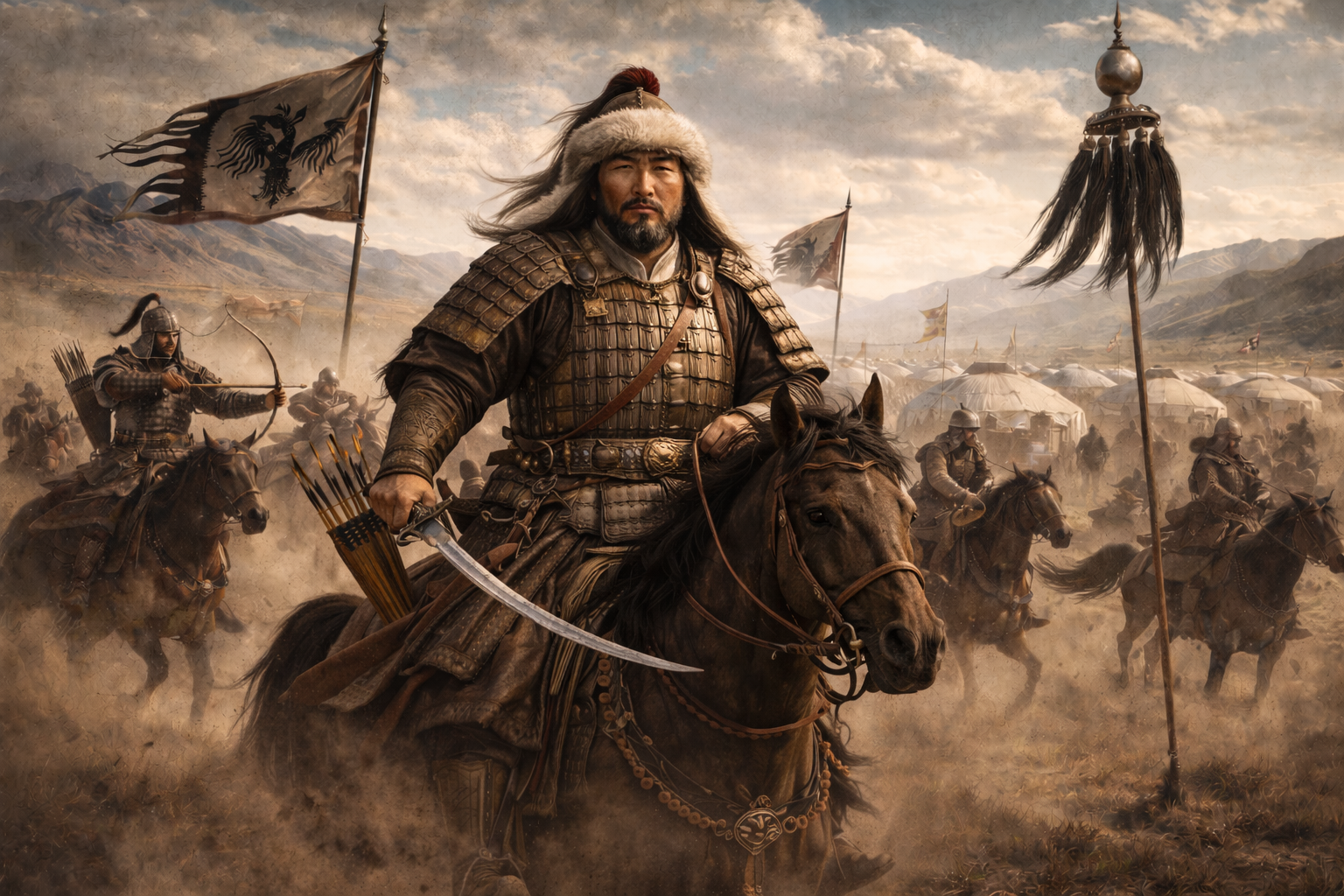
The Mongol Empire
From 1206 to 1368, a vast Eurasian arc stretching from the Mongol steppe to China and from the Near East to Eastern Europe witnessed the rise, expansion, and transformation of the Mongol Empire. Peoples involved included Mongols, Tanguts of Western Xia, Jurchen Jin, Khwarazmians, Rus’ and Cumans, Poles and Hungarians, Seljuks of Rum, Nizaris, Abbasids, Mamluks, Southern Song, Japanese, the Golden Horde, and finally the Ming. Politically the story turns on kurultai, conquests, vassalage, dynastic schisms, and administrative reforms; economically, the yam relay system, census-based taxation, and the Pax Mongolica sustained trade and crafts, while paper currency and urban elites reshaped exchange. Socially the empire resettled craftsmen and specialists and forged long-distance mobility along the Silk Roads. In religion it combined pragmatic toleration and broad patronage, with the Islamization of the Golden Horde under Öz Beg as a decisive shift. Key innovations included systematic siege engineering across regions, counterweight trebuchets, long-range logistics, and instruments of authority such as the paizi. Commerce and diplomacy linked Baghdad, Sarai, and Dadu, with embassies to Europe and arrangements with Genoa and Middle Eastern states. War and crisis defined the age: Zhongdu, Bukhara, and Baghdad fell; Mohi and Köse Dağ redrew frontiers; Ayn Jalut halted the Mongols in the Levant; and the invasions of Japan failed due to logistics and typhoons. The legacy was an Eurasia both integrated and scarred, with techniques, knowledge, and trading networks spread on an unprecedented scale, and with new political formations culminating in the fall of Dadu and the end of the Yuan. Non disponibile.
This Journey requires a free account to open the interactive experience.