GeoHistory Journey
The Ottoman Empire
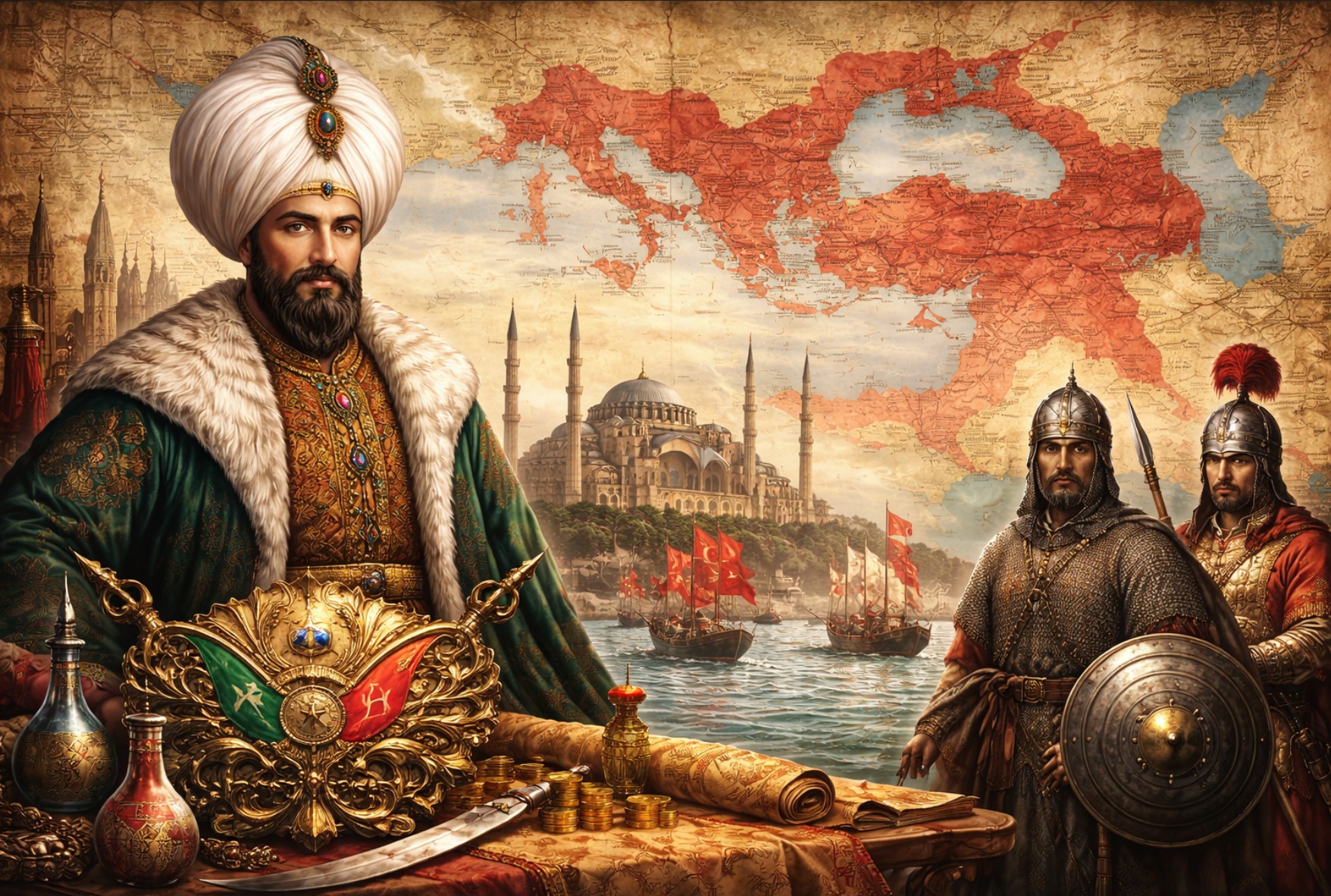
From an Anatolian frontier beylik to a Mediterranean power, this journey spans Asia, Europe, and Africa from 1299 to 1922. The cast includes the Ottomans and their counterparts: Byzantines, Mamluks, Venetians, Safavids, Habsburgs, Russians, Balkan peoples, and Arabs. Politics chart the rise from local principality to a multinational empire, using timar and millet systems and later centralizing reforms, before unraveling after World War I. The economy rides caravan and sea routes, Egyptian grain, urban crafts, and European capitulations; socially, devshirme, Janissaries, ulema, and provincial notables shape power. Religion underpins legitimacy, from sultan-caliph to the post-Chaldiran Sunni-Shi‘i balance and guardianship of holy cities. Innovation ranges from Mehmed II’s artillery to naval logistics and European-style forces under the Nizam-i Cedid and the Tanzimat reforms. Diplomacy and trade thread through Karlowitz and Berlin, while wars—from Vienna to Lepanto, from Candia to Crimea—redraw borders. Balkan crises and the Great War hasten the sultanate’s end, leaving institutions, borders, and memories that define the Middle East and the Balkans. Not available: none.
This Journey requires a free account to open the interactive experience.