GeoHistory Journey
The Persian Empire
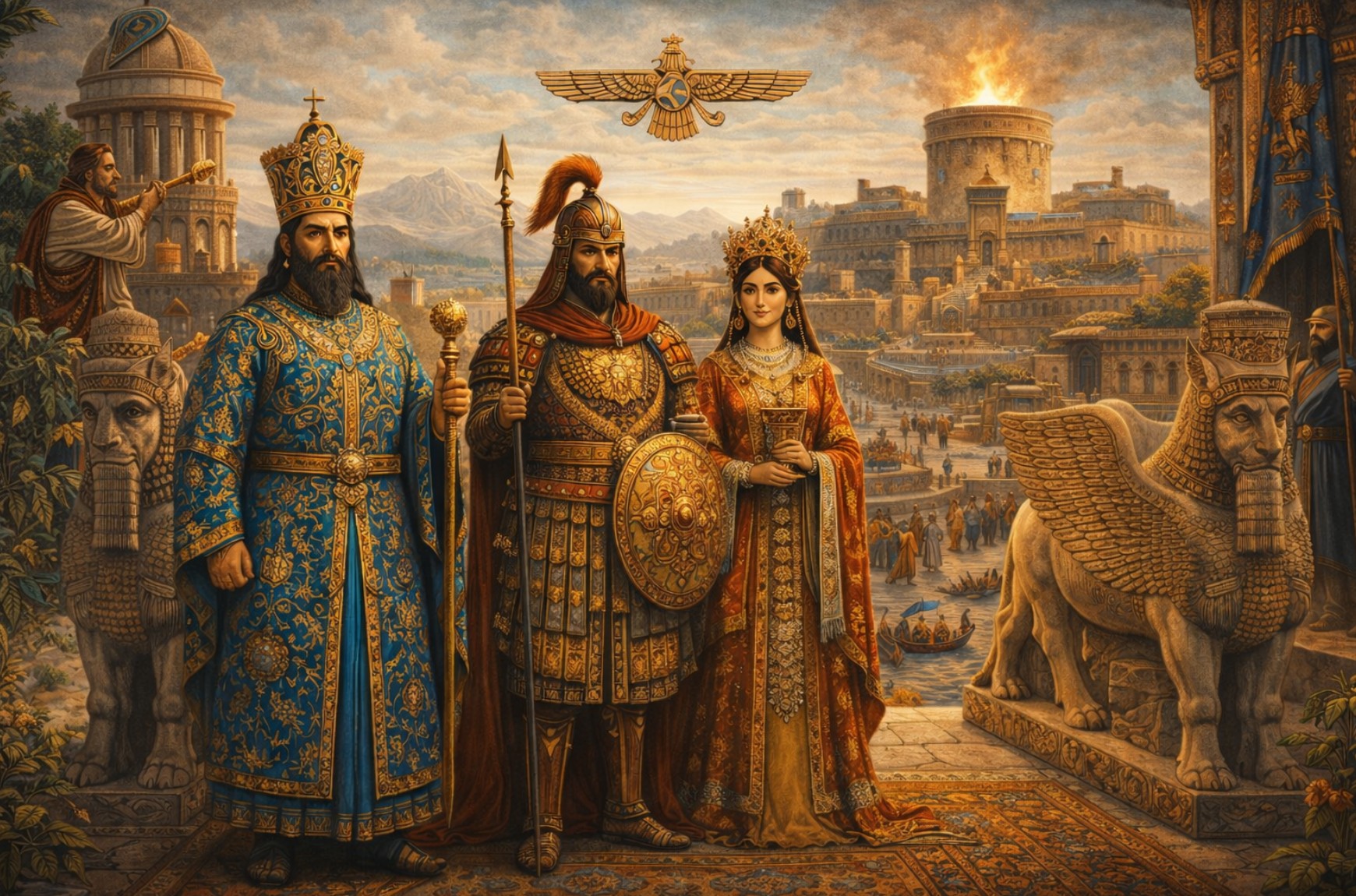
This journey spans the Iranian plateau, Mesopotamia, Anatolia, Egypt, and the Levant from 550 BC to AD 642, tracing imperial evolution from the Achaemenids through Parthians and Sasanians to the Arab conquest. Many peoples take the stage: Medes and Persians, Lydians and Babylonians, Jews, Egyptians, Greeks and Macedonians, then Parthians and Romans, and finally Byzantines and Arabs. Politically it is a saga of dynastic foundings, satrapal administration, fiscal and military reforms, punctuated by coups, revolts, and strategic restorations. Economically and infrastructurally, the record highlights the Royal Road, the imperial courier system, standardized coinage, and trading hubs along the Tigris, Euphrates, and Mediterranean. Religion threads through it all: imperial legitimation via Babylonian cults, the edict enabling the Jewish return to Jerusalem, the authority of Zoroastrian clergy, and the social upheaval of the Mazdakite movement. Wars and crises mark the turning points: the Greco-Persian conflicts, the Macedonian conquest, Roman-Parthian rivalry, the long Byzantine-Sasanian struggle, and finally the Rashidun expansion. The legacy is an imperial political culture that shaped bureaucracy, mobility, diplomacy, and royal iconography across the Near East for over a millennium.
This Journey requires a free account to open the interactive experience.