GeoHistory Journey
Islam
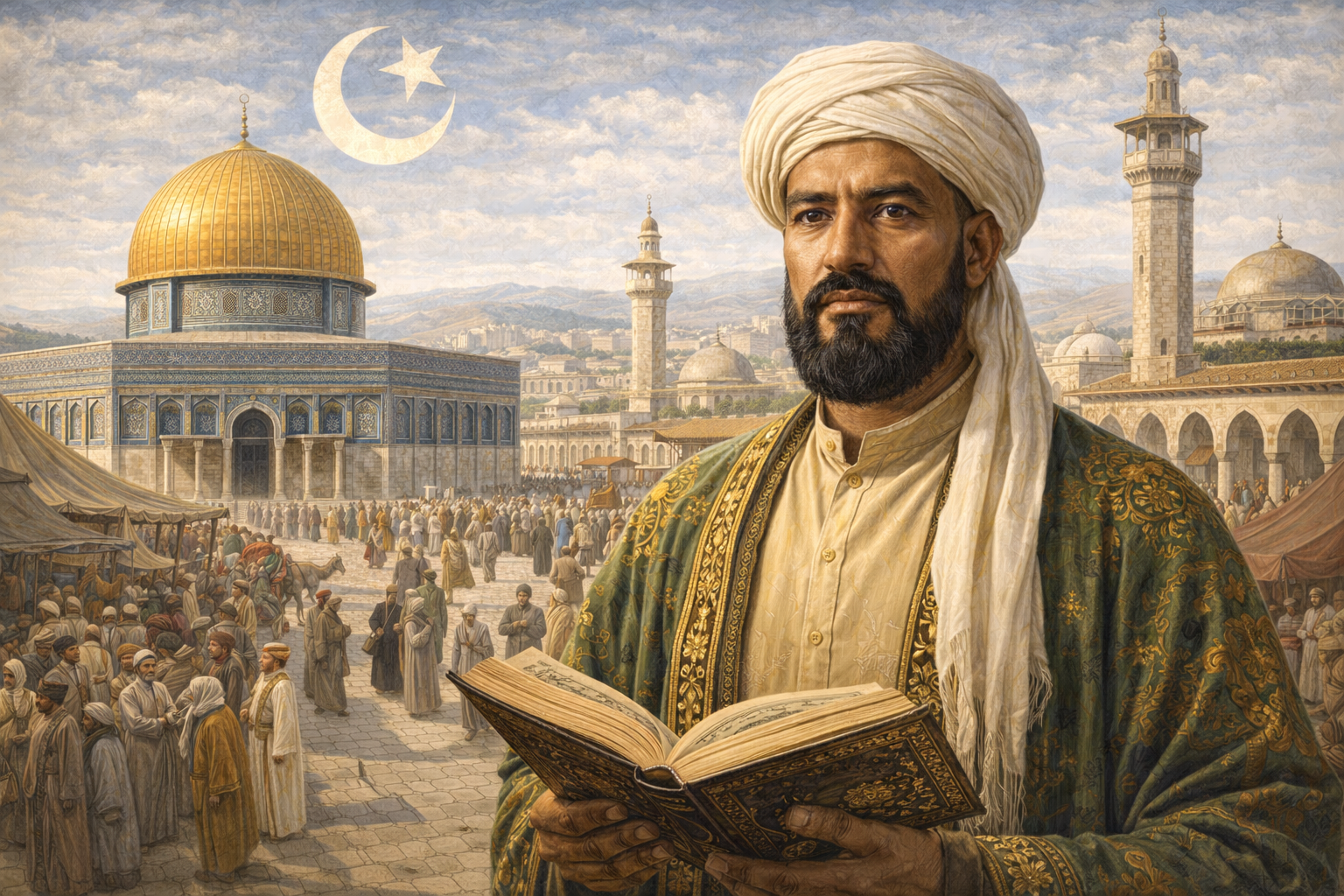
Between the 7th and the 21st centuries, the Islamic world moves through phases of foundation, expansion, crisis, and reform. In 610, in western Arabia, Muhammad sets in motion a religious and social process that turns Mecca and Medina into centers of reference. From 622 onward, with the birth of the umma, the Arabian Peninsula becomes a politico-religious laboratory governed by communal norms and tribal arbitration. Between 632 and 750, conquests in Syria, Egypt, Persia, al-Andalus, and Central Asia reshape Eurasia and North Africa, while integrating peoples and knowledge into shared cultural circuits. In the 8th–9th centuries, Baghdad and the Bayt al-Hikma catalyze science and philosophy, leaving lasting effects on medicine, mathematics, and astronomy. From the 10th to the 11th centuries, Fatimid Cairo and the Seljuk restoration reveal confessional plurality and the institutionalization of Sunni education. With the Crusades (11th–13th c.) and the Mongol shock (1258), the Levant and Iraq become theaters of global clashes, to which the Mamluks respond at Ayn Jalut in 1260. In 1453, Constantinople reorients Ottoman power between the Mediterranean and the Black Sea, while in 1501 the Safavids establish a Shi‘i state in Iran, fixing a durable confessional frontier. In the 16th–17th centuries, Mughal India flourishes as an Indo-Islamic crossroads, integrating administration, arts, and architecture. In the 19th century, the Egyptian Campaign and the Tanzimat launch asymmetric modernizations with legal reforms, new institutions, and European imperial pressure. After 1918, the Ottoman collapse and the abolition of the Caliphate (1924) redefine leadership and sovereignty across Turkey, the Middle East, and the Arabian Peninsula. From 1932, the Saudi monarchy links custodianship of the Holy Places to state centralization, while in 1947 the Partition of India reshapes demographics and geopolitics of the subcontinent. In 1979, the Iranian Revolution and the Afghan war against the USSR inaugurate a new transnational ideological and military phase. From 2001 onward, 9/11, the Arab Spring, and ISIS force a renegotiation of security, pluralism, and coexistence; in 2019, in Abu Dhabi, an interfaith document offers a shared language for peace.
This Journey requires a free account to open the interactive experience.