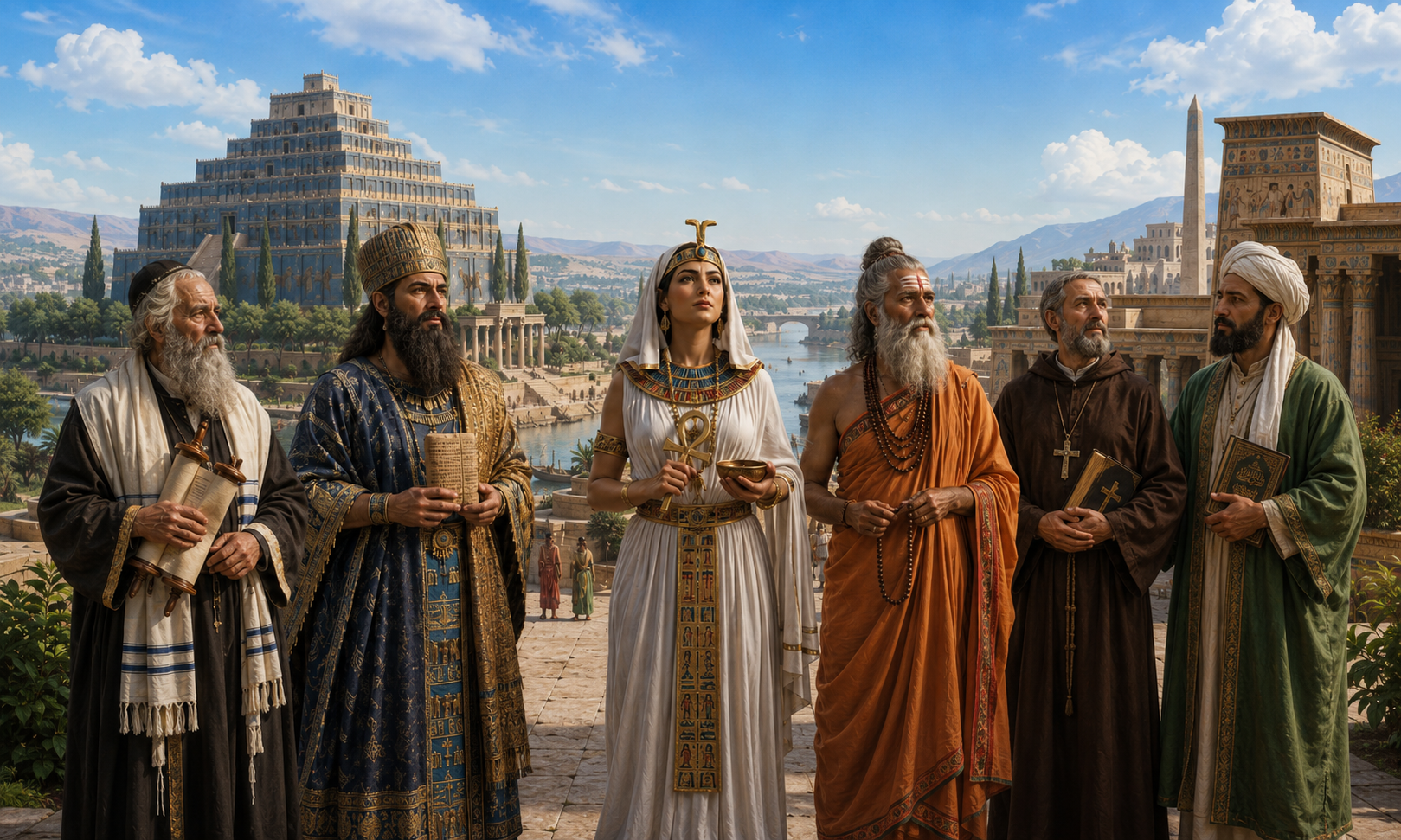
Origins and spread of major Religions
From the carved stones of early foragers to the global podiums of the nineteenth century, humanity’s religious history unfolds as a weave of rites, texts, and institutions that reshape collective life. The first sanctuaries fix the rhythm of communal gathering; ancient cities entrust temples with economic and symbolic order; empires turn myth and precept into political legitimacy; trade routes mix languages, ideas, and devotions. Reforms, councils, and translations open or close gateways, while charismatic teachers and ascetic movements pivot attention from sacrifice to ethics, discipline, and scripture. Monasteries, churches, synagogues, and mosques rise along caravan trails, seaports, and capitals, and within this landscape the major traditions take shape, still structuring memory and imagination. The path is not linear: crises, schisms, and syncretisms are both the price and engine of change. The common thread is a quest for stronger bonds between people and the unseen world, continually reforged by contact with shifting powers, new economies, and fresh languages. This journey follows the knots where devotion became institution, story became law, and charisma crystallized into enduring communities.