GeoHistory Journey
Persia: From Ancient Civilizations to the Constitutional Revolution
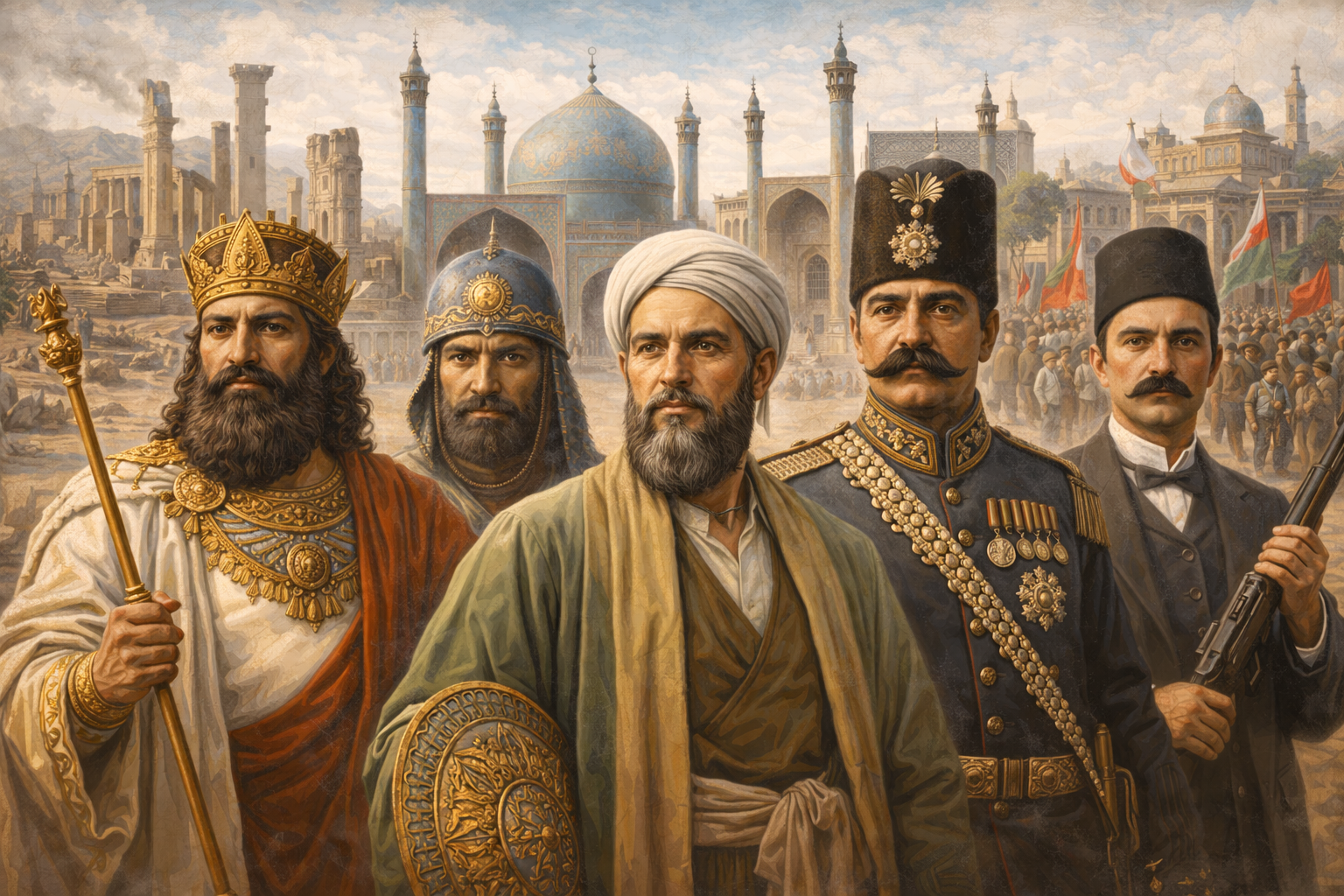
From the late 4th millennium BCE, centers like Susa on the Iranian plateau developed temple-based administration and new control tools. Between 2000 and 1600 BCE, the Kingdom of Elam consolidated power and trade, creating political continuity in Susiana. In the 7th century BCE, at Ecbatana, the Medes structured a regional power that challenged Assyria. In 612 BCE, the fall of Nineveh marked a turning point and opened the way to new orders. Between 553 and 550 BCE, Cyrus the Great overthrew the Medes and founded the Achaemenid Empire, unifying wide areas of Western Asia. In 539 BCE, with the capture of Babylon, the Achaemenids imposed clemency policies and efficient administration. Under Darius I (522–486 BCE), satrapies, the Royal Road, and Persepolis defined a durable imperial model. In 480–479 BCE, Xerxes’ invasion was halted in Greece, limiting Persian expansion westward. In 331 BCE, the defeat at Gaugamela handed supremacy to Alexander and Hellenistic culture. From the 3rd century BCE, the Seleucids and then the Parthians reorganized satrapies, mediating between Iranian and Greek cultures. In 224 CE, the Sasanians centralized power and promoted Zoroastrianism, amid clashes with Byzantium and the reforms of Khosrow I. Between 602 and 628, the Roman–Sasanian war exhausted both empires and prepared the ground for the Islamic conquests. Between 636 and 642, al-Qadisiyyah and Nihawand opened Iran to Islam and new elites. Between the 9th and 11th centuries, Samanids, Buyids, and Seljuks fostered cultural revivals and administrative reforms. From 1219, Mongol invasions and later Ilkhanid and Timurid transformations reshaped politics and the economy, paving the way to the Safavid state, Ottoman conflicts, and, in modern times, Qajar reforms and the Constitutional Revolution.
This Journey requires a free account to open the interactive experience.