GeoHistory Journey
Indigenous Peoples of North America
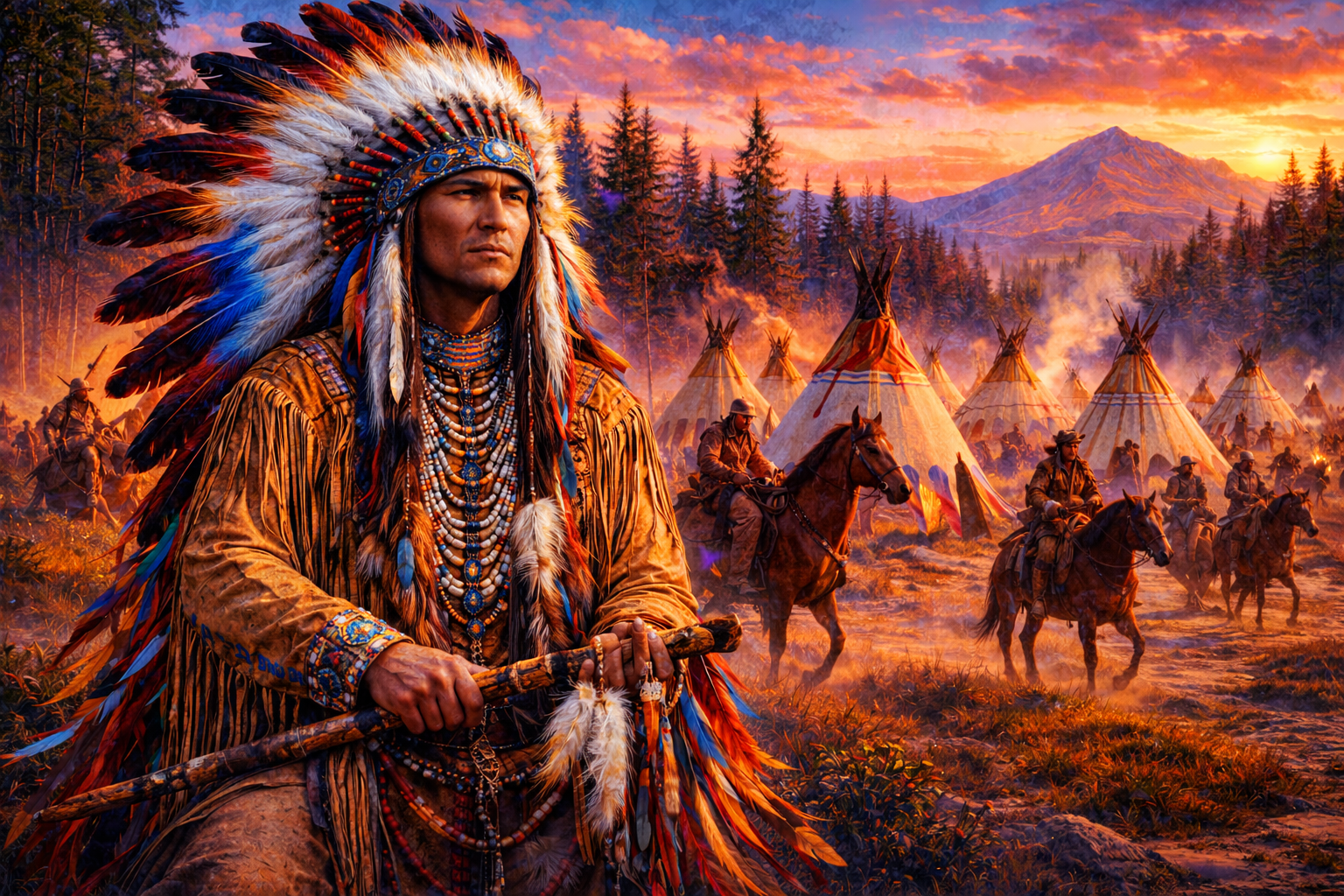
This Journey spans North America from 16,000 BC to the twenty-first century, tracking migrations, ceremonial cities, transoceanic encounters, wars, treaties, and political renewal. Its protagonists include Paleoindians; the Clovis, Adena, and Hopewell traditions; the Ancestral Puebloans; the Mississippian center of Cahokia; the Haudenosaunee; peoples of the Northeast and Southwest; Canada’s First Nations; the Lakota and Cheyenne; the Cherokee; and the Inuit. Political and social dynamics unfold—from the Great Law of Peace to French–Indigenous diplomacy, from forced removals to rights-based movements—interlaced with economies of exchange that moved obsidian, copper, and turquoise across vast distances. Architectural and urban innovations (Chaco and Cahokia), engineering feats (Poverty Point earthworks), complex governance (the Iroquois Confederacy), and modern legal frameworks (Boldt, NAGPRA, Nunavut) all emerge. Crises are stark: the epidemic “Great Dying,” colonial conflicts like King Philip’s War, massacres such as Sand Creek and Wounded Knee, and treaty violations after Little Bighorn. Diplomacy threads the centuries: the Great Peace of Montreal, the Second Treaty of Fort Laramie, and later court decisions redefining sovereignty and resources. Economic policy shifts from allotment, termination, and relocation to renewed self-government under the Indian Reorganization Act and constitutional recognition in Canada. The legacy is a cultural and political resurgence culminating in contemporary mobilizations at Standing Rock, a living testament to Indigenous sovereignty.
This Journey requires a free account to open the interactive experience.