GeoHistory Journey
Prehistory and the Origins of Humankind
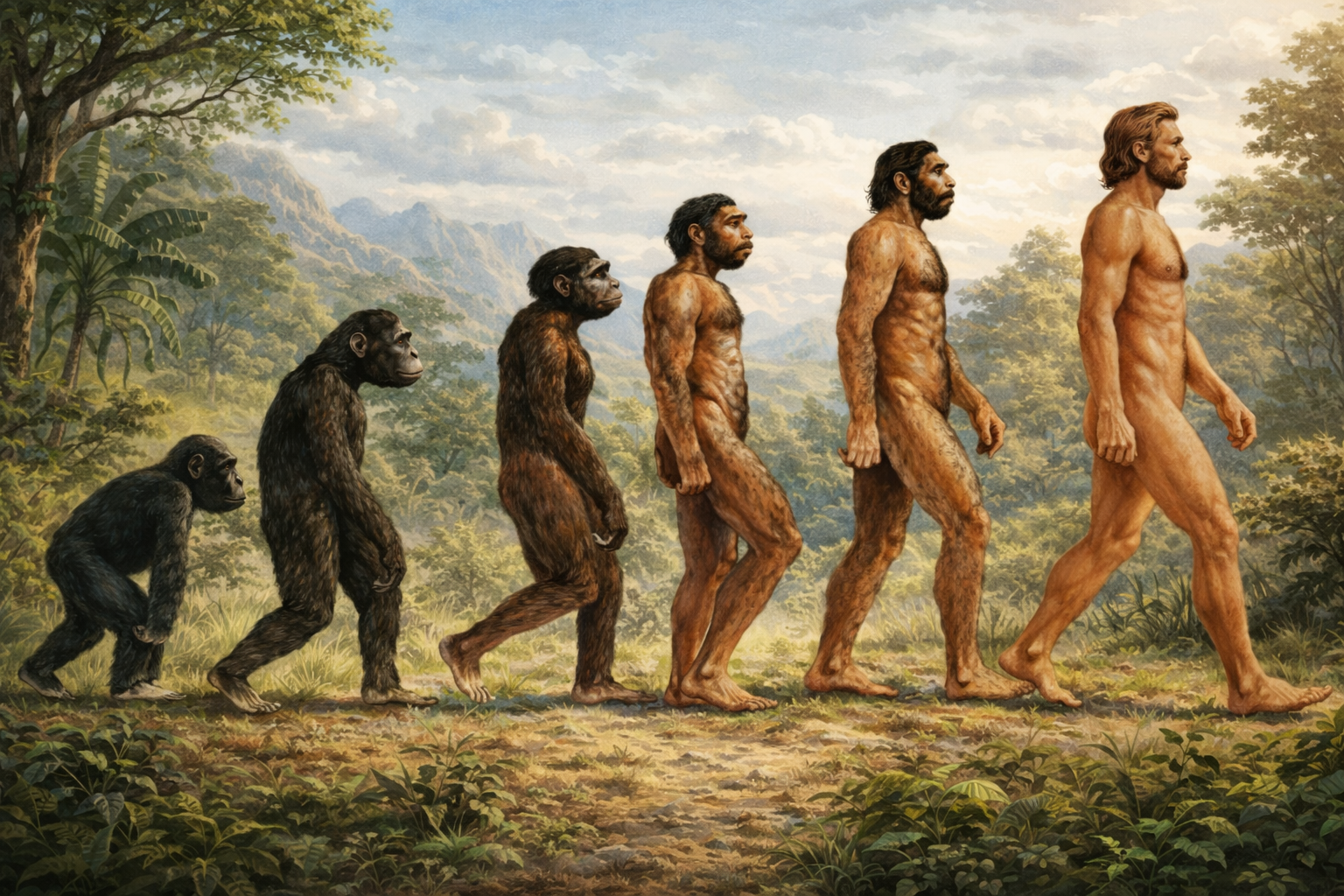
Spanning Africa, Asia, Europe, Oceania, and the Americas, this journey runs from the Miocene to the threshold of the first cities, between 7 million and 3.2 thousand BC. Its cast includes Sahelanthropus, Australopithecus, early Homo, Neanderthals, Denisovans, and finally Homo sapiens, each leaving site-specific traces at decisive moments. Social dynamics appear in cooperative hunting, in the care for the vulnerable seen at Dmanisi, in the ritual architecture of Göbekli Tepe, and in collective water management and defense at Jericho. Economically, innovations unfold from Oldowan and Acheulean toolmaking to fire control, organized big-game hunting, pottery for storage and cooking, wheeled transport signaled by the Bronocice pot, and accounting-based writing at Uruk, with long-distance exchanges of obsidian, shells, and pigments. Religious and symbolic behavior emerges in Blombos engravings, the shared human-dog burial at Bonn-Oberkassel, and possible ritual deposition at Sima de los Huesos. Climatic stress such as the Younger Dryas at Abu Hureyra drives adaptation and speeds domestication, while Jericho’s walls and tower answer environmental and organizational pressures. Formal diplomacy is not documented, but intercommunity gatherings and ritual, along with far-flung exchange, hint at informal pacts and alliances. The historical legacy is a steady crescendo: from the first flaked stone to words impressed on clay tablets, a rising complexity that sets the stage for farming, urbanization, and the state.
This Journey requires a free account to open the interactive experience.