GeoHistory Journey
The Industrial Revolution
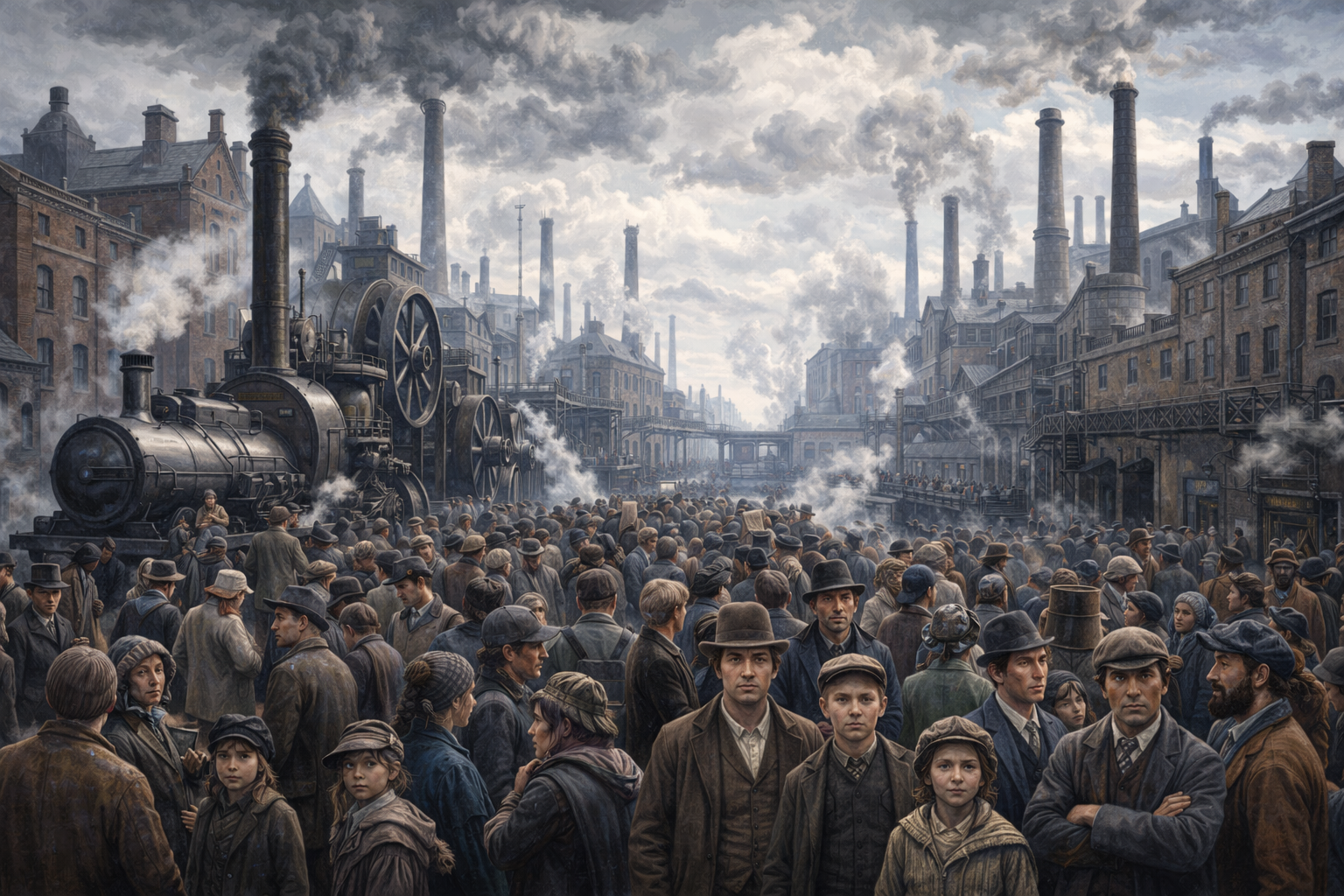
This journey spans Europe and North America—from England to Germany, Belgium, the United States, and Egypt—between 1709 and 1913. Its actors include entrepreneurs, engineers, chemists, mechanics, and a burgeoning industrial workforce with women and children in early mills and miners underground. Politics brings early social legislation and state enforcement against unrest; economics centers on capital, patents, vertical integration, and global markets; social dynamics revolve around urban growth, factory discipline, conflict, and migration; religious dynamics: Not available. A cascade of innovations—from coke-based ironmaking and steam power to spinning and looms, canals and railways, the telegraph, synthetic dyes, the Otto engine, the telephone, electrification, and scientific management—reshapes production and daily life. Commerce and diplomacy crystallize in infrastructures that compress distance and time, in showpieces like the Great Exhibition, and in Suez’s reorientation of imperial routes. Crises surface in Luddite riots, railway accidents, urban dislocation, and financial disputes. The legacy is a powerful mix of unprecedented productivity and consumption alongside new questions about labor, environment, industrial power, and standardization, culminating in the assembly line and managerial science.
This Journey requires a free account to open the interactive experience.