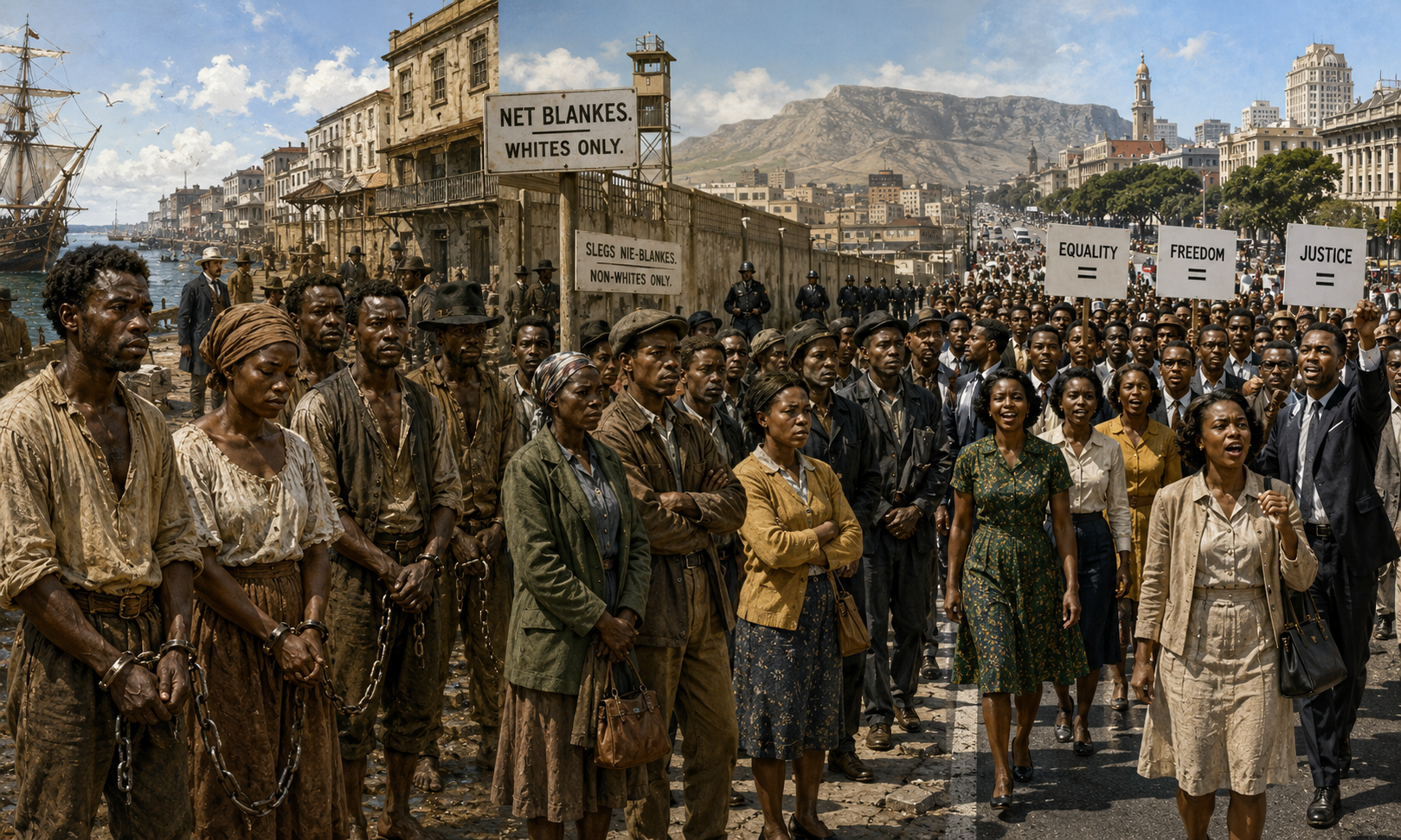
Slavery, Apartheid and Civil Rights
From the first laws carved in stone to the twentieth-century courtrooms, the history of slavery and segregation follows a thread woven from economic power, legal orders, and human resistance. Empires and monarchies turned subordination into norm, oceans became corridors for coerced labor, and entire societies grew accustomed to wealth built on denying personhood. It took slave revolts and public scandals to crack that edifice, followed by intellectual and religious mobilizations that pressed governments to legislate—amid compromises and backlash. The nineteenth century ended formal bondage only to see new legal barriers arise; the twentieth exposed their hypocrisy in the streets, from American neighborhoods to South African townships, while international law struggled to set common standards. The passage from bondage to citizenship was never linear: it emerged from tension between economy and dignity, sovereignty and rights, memory and justice, and advanced when institutions finally gave shape to demands rising from below, sustained—unevenly—by a growing global conscience.